Automation & AI in Pharma Manufacturing: What's Actually Changing on the Factory Floor
Saar Biotech Industry Insights Team
··
6 min read
·
Updated August 2026
Key Takeaways
Digital technologies are projected to account for 40% of total manufacturing expenditure in India by 2025, up from 20% in 2021 — a real, measured shift, not a hype cycle.
The most valuable current AI applications in pharma manufacturing are narrow and specific: predictive maintenance, automated visual defect inspection, and anomaly detection — not sweeping ‘AI-run factories.’
Automated, deep-learning-based visual inspection can identify defects like cracked containers or particulate contamination that manual inspection is prone to miss at scale.
Regulators including the WHO and EMA explicitly require AI systems used in manufacturing to remain ’explainable’ — a black-box algorithm making unreviewable quality decisions is a regulatory red flag, not an innovation win.
For a brand owner, the practical benefit of a technology-forward manufacturer isn’t the AI itself — it’s more consistent batch-to-batch quality and fewer unplanned production delays.
Every pharma manufacturing conversation in 2026 seems to include the word “AI” somewhere — often as a marketing claim rather than a real operational detail. So let’s set the hype aside and look at what’s actually changing on the factory floor, backed by real industry data rather than buzzwords.
Curious how this connects to quality systems generally?
See our Quality Control Guide for the full WHO-GMP testing and batch release framework this technology operates within.
The Real Number Behind the Hype
Digital technologies are projected to account for 40% of total manufacturing expenditure in India by 2025 — double the 20% share recorded in 2021. That’s a genuine, measured structural shift in capital allocation, not a speculative trend. But the number that matters more for a brand owner isn’t the spend — it’s where that investment is actually going.
Narrow, Not Sweeping
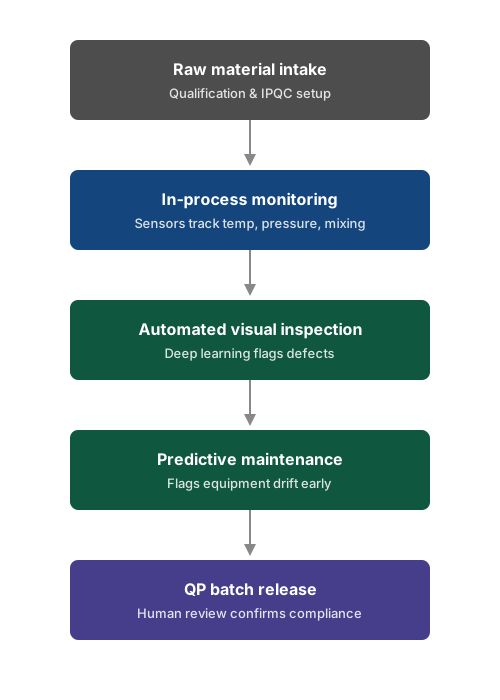
The most valuable current applications of AI in pharma manufacturing are specific and operational: predictive maintenance, automated visual inspection, and anomaly detection in process data. This is very different from the “AI runs the factory” narrative that sometimes accompanies these conversations.
Where AI Is Genuinely Changing Manufacturing
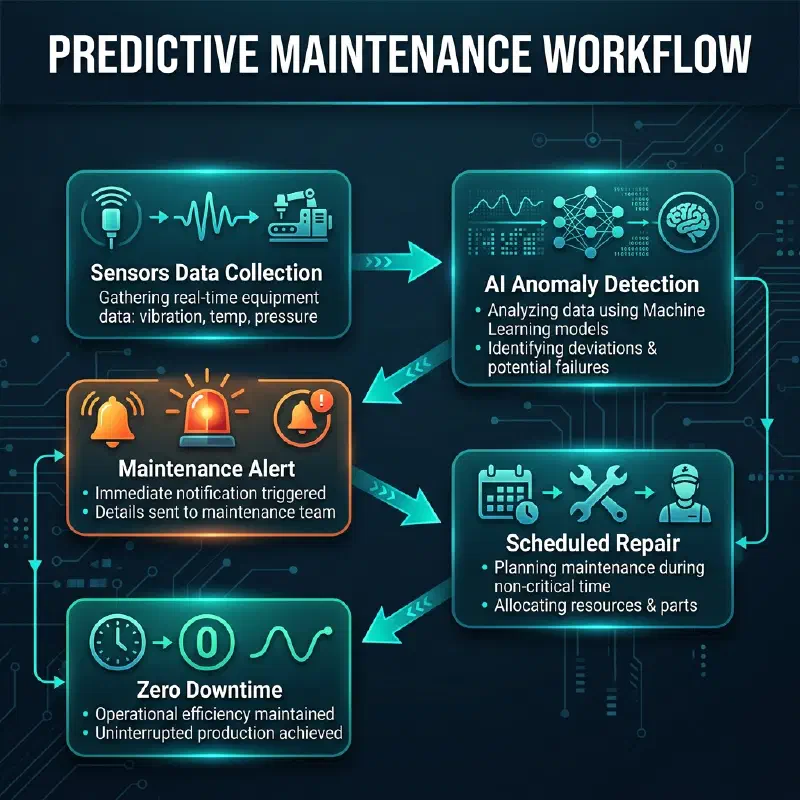
1. Predictive Maintenance
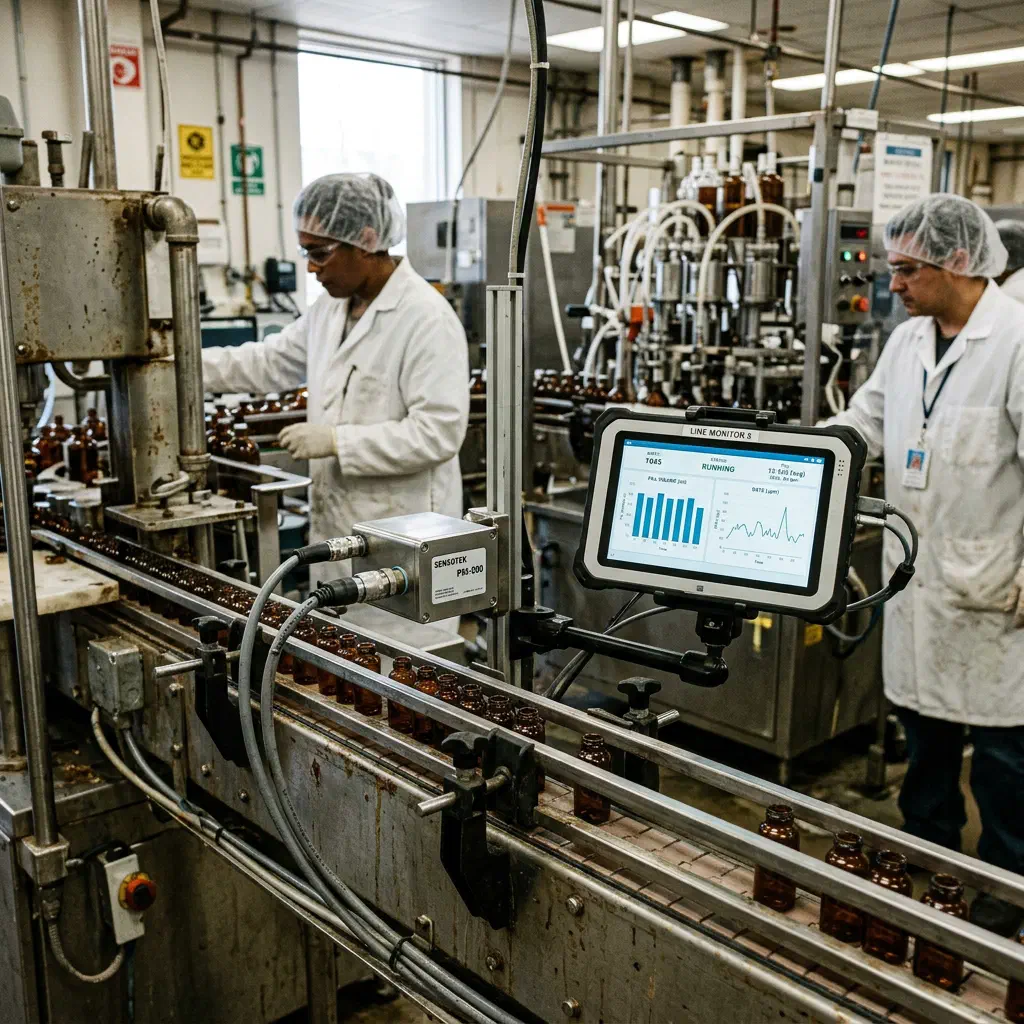
Rather than servicing equipment on a fixed schedule or waiting for a breakdown, sensor data and pattern analysis can forecast when a machine is likely to drift out of specification or fail. For a brand owner, this is one of the more practically important applications — equipment failure is a common, often invisible cause of missed dispatch timelines.
2. Automated Visual Inspection
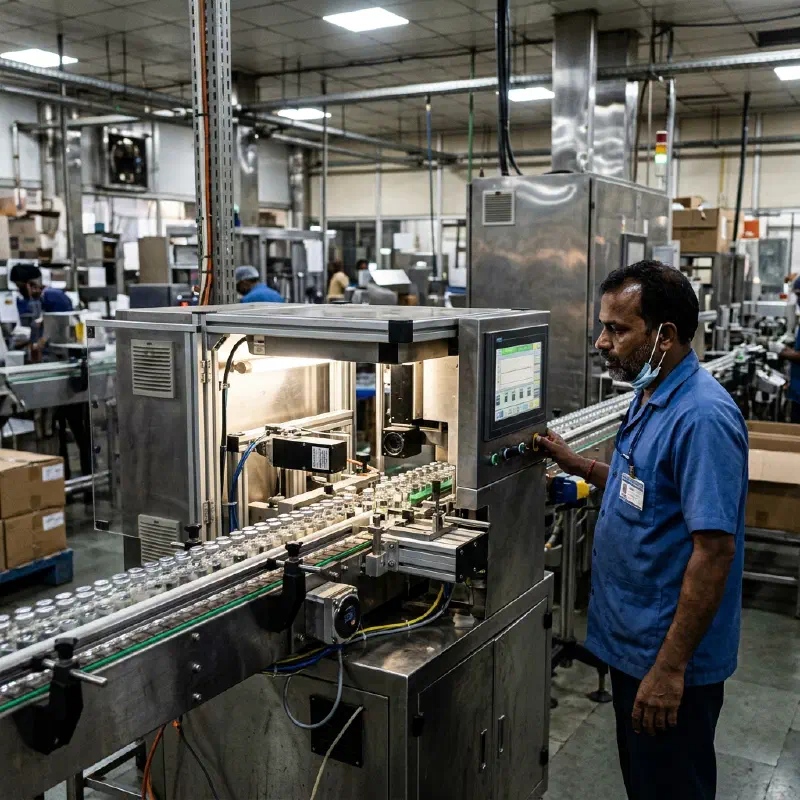
Deep learning applied to high-resolution imaging can identify defects — cracked containers, particulate contamination, inconsistent fill levels — with a level of consistency that manual visual inspection struggles to match at high production volumes. Human inspectors fatigue; a properly validated automated system doesn’t.
3. Anomaly Detection in Process Data
Continuous monitoring of process parameters (temperature, pressure, mixing time) can flag subtle deviations before they become a batch-level failure, catching problems earlier in the process than traditional end-of-batch testing alone.
The Regulatory Reality: “Explainable” Is Non-Negotiable
This is the part the hype cycle tends to skip. Regulators including the WHO and EMA have been explicit that any AI system used in a quality-relevant capacity must remain explainable — a human reviewer needs to be able to understand and verify why a system flagged or passed a batch.
What This Rules Out
A manufacturer claiming an opaque, unreviewable “black box” algorithm makes autonomous release decisions isn’t ahead of the regulatory curve — they’re describing something that wouldn’t currently pass inspection. Genuine, compliant AI adoption in pharma manufacturing is deliberately conservative about where automation is allowed to operate without human oversight.
What This Actually Means for You as a Brand Owner
The AI conversation matters to you only insofar as it changes two things you actually care about: batch-to-batch consistency and on-time dispatch. Framed that way, here’s the practical translation:
Technology
What It Prevents
Why It Matters to You
Predictive maintenance
Unplanned equipment downtime
Fewer surprise delays to your delivery timeline
Automated visual inspection
Defective units reaching dispatch
More consistent product quality, batch after batch
Process anomaly detection
Deviations escalating into full batch failures
Fewer wasted batches, more predictable costs
A Better Question Than 'Do You Use AI?'
Instead of asking a manufacturer if they “use AI” — a question that invites a marketing answer — ask specifically: “What system do you use to predict equipment maintenance needs, and how do you monitor process deviations in real time?” A manufacturer with genuine capability will answer concretely; one without it will speak in generalities.
How Saar Biotech Approaches Manufacturing Technology
We treat automation and process monitoring the same way we treat every other part of our quality system: as a tool that supports validated, human-reviewed decision-making, not a replacement for it. Across our 4
manufacturing units in Baddi, our approach to technology adoption is deliberately practical — investing in systems that measurably reduce variability and improve consistency for our 2250+
partner brands, rather than adopting technology for its own sake.
Conclusion
The real story of AI in Indian pharma manufacturing isn’t dramatic — it’s a steady, measurable shift toward predictive, data-driven operations in specific, well-defined areas: maintenance, inspection, and process monitoring. The manufacturers worth partnering with are the ones applying this technology conservatively and explainably, in service of consistent batch quality — not the ones using “AI-powered” as a marketing label with nothing concrete behind it.
Want to understand how our quality systems actually work?
Is AI actually being used in Indian pharma manufacturing today, or is this mostly future talk?
It’s already in active use, though selectively rather than universally. Industry analysis shows digital technologies are projected to make up 40% of total manufacturing expenditure in India by 2025, up sharply from 20% in 2021. The most mature applications are narrow and operational — predictive maintenance, automated visual inspection, and process anomaly detection — rather than fully autonomous factories.
What does 'predictive maintenance' actually mean for a pharma manufacturer?
Predictive maintenance uses sensor data and pattern analysis to forecast when equipment is likely to fail or drift out of specification, allowing maintenance to happen before a breakdown disrupts a production run. For a brand owner, this translates into fewer unplanned delays and more reliable dispatch timelines, since equipment failures are a common hidden cause of missed deadlines.
How is AI used for quality control specifically?
One of the most concrete applications is automated visual inspection — using deep learning on high-resolution images to detect defects like cracked containers, particulate contamination, or fill-level inconsistencies far more consistently than manual visual checks, especially at high production volumes where inspector fatigue becomes a real factor.
Do regulators allow AI to make quality decisions in pharma manufacturing?
Regulators are cautious and specific about this. The WHO and EMA both require that any AI system used in a quality-relevant capacity remain ’explainable’ — meaning a human reviewer must be able to understand and verify why the system flagged or passed a batch. An opaque ‘black box’ algorithm making unreviewable release decisions would not meet current regulatory expectations.
Should I only work with a manufacturer that uses AI and automation?
Technology adoption is a useful signal, but it’s not a substitute for evaluating a manufacturer’s fundamentals — WHO-GMP compliance, quality systems, and track record still matter most. The right way to use this information is as an additional question during due diligence: ask specifically what automated or predictive systems a manufacturer uses for maintenance and quality monitoring, rather than treating ‘AI-powered’ as a marketing claim to take at face value.
Saar Biotech Industry Insights TeamPharmaceutical Manufacturing Experts · Baddi, India
The Saar Biotech editorial team comprises regulatory affairs specialists, production pharmacists, and quality assurance managers with a combined 21+ years of pharmaceutical manufacturing experience.
Why Choose Saar Biotech as Your Contract Manufacturing Partner?
Across every dosage form and every therapeutic area, Saar Biotech maintains the same uncompromising standards — because your brand's reputation depends on it.
WHO-GMP Certified
All dosage forms manufactured under WHO-GMP and ISO 9001:2015 in Baddi, India.
30–45 Day Turnaround
From artwork approval to first dispatch — delivered on time, India-wide.
Complete Regulatory Support
DCGI licensing, state permissions, COA issuance — handled by our team.
Segregated Lines
Dedicated Beta-Lactam and Non-Beta-Lactam manufacturing blocks for absolute purity.
240+Approved Formulations
2250+B2B Partners Served
Schedule MCompliant Manufacturing
30–45Day Turnaround (Days)
Search products, compositions, and company insights
Start an enquiry
Tell us what you want to manufacture
Share approved composition details, product category, dosage form, packing requirement, target quantity, and documentation needs. The team responds with practical next steps.