
In the pharmaceutical industry, quality is not a feature—it is a legal mandate and a moral obligation. When pharmaceutical marketing companies contract a third-party manufacturer, they are placing the reputation of their brand and the safety of their patients entirely in the hands of the manufacturer’s Quality Control (QC) department.
This guide provides a definitive, expert-level walkthrough of the rigorous, multi-layered quality control systems required to maintain WHO-GMP compliance in modern Indian pharmaceutical contract manufacturing.
The Core Pillars of Pharmaceutical Quality Control
A robust QC system does not begin when the finished tablet comes off the press; it begins the moment a raw material enters the facility — and it ends only when the product has been consumed by the patient and the stability data file closed.
“Quality cannot be tested into a product; it must be built into it from the ground up.” — WHO GMP Guideline, Annex 4
At Saar Biotech, our quality framework is built upon three non-negotiable pillars, each dependent on the previous:
- Raw Material & Excipient Validation: No material enters the production floor without complete chemical and microbiological clearance from our QC laboratory.
- In-Process Quality Control (IPQC): Continuous monitoring of physical parameters (weight variation, friability, hardness, dissolution) during active production runs at defined intervals.
- Finished Product Testing & Batch Release: Final pharmacopoeial clearance, COA generation, and Qualified Person (QP) sign-off before a batch is certified for commercial release and dispatch.
The Quality System vs. Quality Control
A critical distinction: Quality Control (QC) is the laboratory testing function — it tests and verifies. Quality Assurance (QA) is the broader system — it designs and enforces the framework within which QC operates. Both are mandatory under WHO-GMP.
| Function | Role | Key Documents |
|---|---|---|
| Quality Control (QC) | Testing, analysis, reject/release decisions | COA, ATR, Stability Data |
| Quality Assurance (QA) | SOPs, audit, change control, CAPA | BMR, BPR, Deviation Reports |
| Regulatory Affairs | Licensing, filings, authority liaison | Drug License, DMF, Dossiers |
Raw Material Control — The Foundation of Quality
Human error and substandard raw materials account for the majority of pharmaceutical quality failures globally. This is why WHO-GMP places vendor qualification as one of its most critical requirements.
Vendor Qualification Process
Before any API or excipient is approved for use in production at Saar Biotech, the vendor must pass a full qualification audit:
- Vendor Assessment: Review of the vendor’s GMP certification, audit history, and facility credentials.
- Sample Testing: A minimum of three separate lots tested against full pharmacopoeial specifications.
- Audit (if required): For critical APIs, an on-site facility audit by our QA team.
- Approved Vendor List (AVL): Only vendors on the AVL are permitted to supply materials.
Incoming Material Testing Protocol
| Test Category | Tests Performed | Standard |
|---|---|---|
| Identity | IR spectroscopy, visual inspection, TLC | IP/BP/USP |
| Purity & Assay | HPLC, titration | IP/BP/USP monographs |
| Physical | Particle size, bulk density, moisture (KF) | In-house spec |
| Microbiological | TAMC, TYMC, absence of pathogens | IP/BP/EP |
| Heavy Metals | ICP-MS (for critical APIs) | ICH Q3D |
In-Process Quality Control (IPQC)
Why IPQC Matters
Batch failures discovered at the end of production are catastrophic — months of raw material cost, labour, and capacity wasted. IPQC exists to catch deviations at the source.
At Saar Biotech, our IPQC team performs checks at every critical process step — not just at the beginning and end of a production run. This includes:
- Granulation Stage: Moisture content, granule size distribution, bulk density
- Compression Stage: Tablet weight every 15 minutes, hardness, friability, disintegration
- Coating Stage: Weight gain percentage, coating suspension viscosity, appearance
View manufacturing details for azithromycin-oral-solution
Environmental Monitoring
In liquid and suspension manufacturing — which is the specialty of Saar Biotech’s Baddi facility — environmental monitoring is not optional. It is a core GMP requirement.
Our manufacturing areas are monitored for:
- Airborne particulate counts (ISO Class 8 / Class D cleanroom standards)
- Microbial contamination via settle plates, contact plates, and air sampling
- Temperature and humidity via continuously recording data loggers (21 CFR Part 11 compliant)
Any excursion from environmental limits triggers an immediate deviation report, investigation, and CAPA (Corrective and Preventive Action).
Analytical Instrumentation & Testing Methods
The Gold Standard: HPLC
High-Performance Liquid Chromatography (HPLC) is the primary analytical tool for pharmaceutical QC. It separates, identifies, and quantifies every chemical component in a formulation — including active ingredients and related substances (impurities).
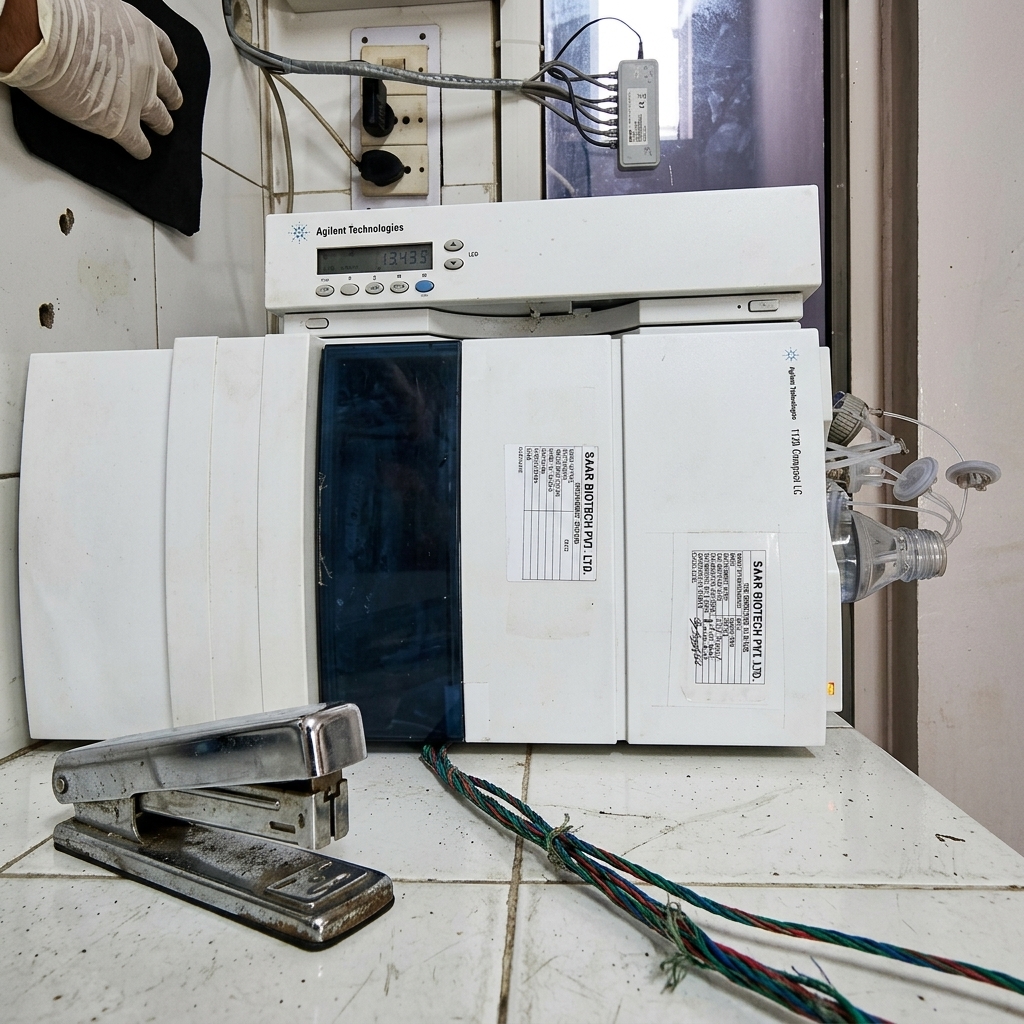 Figure 1: Modern HPLC chromatography setup used for assay testing and impurity profiling at our Baddi QC laboratory.
Key Pharmacopoeial Testing Standards
Depending on the target market and regulatory filing, products are tested against IP (Indian Pharmacopoeia), BP (British Pharmacopoeia), or USP (United States Pharmacopeia) standards:
| Parameter | Specification Example | Test Method | Equipment |
|---|---|---|---|
| Assay (Active Content) | 95.0% – 105.0% | Chromatography | HPLC / GC |
| Dissolution | NLT 80% in 30 min | Apparatus I/II | Dissolution Tester |
| Disintegration | NMT 15 minutes | Mechanical | DT Apparatus |
| Friability | NMT 1.0% w/w | Mechanical | Friabilator |
| Uniformity of Content | Meets USP <905> | Spectrophotometry | UV-Vis |
| pH (liquids) | Within ±0.2 of spec | Potentiometry | pH Meter |
| Microbial Limits | Per IP/USP spec | Membrane filtration | Laminar Airflow + Incubator |
Batch Manufacturing Records (BMR) — The Legal Backbone
The Batch Manufacturing Record is not administrative paperwork — it is the legal backbone of pharmaceutical accountability. Under WHO-GMP, Schedule M, and every major pharmacopoeia, every batch must have a complete, accurate, contemporaneous BMR.
A complete BMR for a single batch of oral suspension at Saar Biotech includes:
- Master Formula (approved reference formula with acceptable tolerances)
- Complete raw material dispensing records with lot numbers, tare/gross weights
- Equipment identifications and cleaning verification
- All in-process test results with operator signatures and time stamps
- Yield calculations at each stage
- Packaging and labelling records
- QC release test results
- QP sign-off and dispatch authorisation
Data Integrity — The New Frontier of GMP Compliance
Data integrity is now the primary focus of CDSCO, WHO, USFDA, and MHRA inspections globally. Dozens of Indian pharmaceutical companies have received import alerts and warning letters not for quality failures — but for data integrity violations.
ALCOA+ Principles
All pharmaceutical records — electronic or paper — must adhere to ALCOA+ principles:
- Attributable — Who generated the data and when?
- Legible — Can it be read now and in the future?
- Contemporaneous — Was it recorded at the time it was created?
- Original — Is this the first capture of the data (not a copy)?
- Accurate — Does it reflect what actually happened?
- +Complete, Consistent, Enduring, Available
21 CFR Part 11 Compliance
For electronic records and electronic signatures used in pharmaceutical manufacturing systems, USFDA’s 21 CFR Part 11 is the governing regulation. Its core requirements:
- Unique user login — no shared passwords
- Audit trail for all record modifications
- Access controls based on role
- Electronic signatures are legally equivalent to handwritten signatures
Here is a simplified architectural concept of how an automated assay clearance check with a compliant audit trail operates:
def verify_batch_assay(batch_no, peak_area_sample, peak_area_std, std_conc, analyst_id):
    """
    Calculates the assay percentage and logs the result
    to a 21 CFR Part 11 compliant audit trail.

    Args:
        batch_no: Unique batch identifier
        peak_area_sample: HPLC peak area of sample
        peak_area_std: HPLC peak area of reference standard
        std_conc: Reference standard concentration (%)
        analyst_id: Logged-in user ID (for audit attribution)

    Returns:
        dict: Pass/fail result with assay value and audit reference
    """
    # Calculate exact assay percentage
    assay_percentage = (peak_area_sample / peak_area_std) * std_conc * 100
    result = round(assay_percentage, 2)

    # 21 CFR Part 11 Audit Logging — attributable, contemporaneous, uneditable
    audit_ref = log_audit_trail(
        batch_no=batch_no,
        test="Assay - HPLC",
        result=result,
        analyst=analyst_id,
        timestamp=True,
        immutable=True  # Locked record — cannot be modified post-creation
    )

    # Standard specification limits: 95.0% to 105.0%
    if 95.0 <= result <= 105.0:
        return {"status": "PASS", "assay": result, "audit_ref": audit_ref}
    else:
        # Automatically triggers OOS workflow — no human delay
        initiate_oos_investigation(batch_no, result, analyst_id)
        return {
            "status": "OOS — Investigation Initiated",
            "assay": result,
            "audit_ref": audit_ref,
            "action": "Batch quarantined pending investigation"
        }

# Example: Automated batch assay check for Azithromycin 200mg/5ml Suspension
batch_status = verify_batch_assay(
    batch_no="AZB-2405-001",
    peak_area_sample=145750,
    peak_area_std=146200,
    std_conc=99.7,
    analyst_id="QC-ANALYST-07"
)
print(batch_status)
# Output: {'status': 'PASS', 'assay': 99.39, 'audit_ref': 'ARL-20240522-001'}
Finished Product Testing & Batch Release
The Certificate of Analysis (COA)
The COA is the single most important document a brand owner receives from their contract manufacturer. Every COA issued by Saar Biotech includes:
- Product Identification: Name, strength, batch number, manufacturing date, expiry date
- All Pharmacopoeial Tests: With the actual result vs. the specification limit
- Analytical Methods Used: Reference to validated, pharmacopoeial or in-house methods
- Environmental Monitoring Summary: For sterile/liquid products
- Qualified Person Declaration: Certifying the batch meets all specifications
- Regulatory Reference: License number, schedule compliance declaration
View manufacturing details for paracetamol-suspension
Stability Testing
A COA reflects the batch quality at time of manufacture. But pharmaceutical products must remain within specification for their entire shelf life. This is proven by stability testing:
- Accelerated Stability: 40°C / 75% RH for 6 months (ICH Q1A)
- Real-Time Stability: 25°C / 60% RH or 30°C / 65% RH for the full shelf-life duration
- In-Use Stability: For multi-dose containers (e.g., 60ml syrups)
Saar Biotech maintains a dedicated stability chamber program for all products. Stability data is part of every product dossier provided to licensing clients.
Quality Control for Specialised Dosage Forms
Nasal Sprays & Liquid Orals
As a specialist manufacturer of nasal sprays, oral liquids, and suspensions, Saar Biotech’s QC protocols include tests specific to these complex dosage forms:
- Spray Pattern Analysis for nasal sprays — verifying consistent particle distribution
- Delivered Dose Uniformity — confirming each actuation delivers the specified dose
- Droplet Size Distribution (laser diffraction) — critical for bioavailability
- Osmolality and Tonicity — essential for physiological compatibility
- Preservative Efficacy Testing (PET) — confirming the anti-microbial system remains effective throughout shelf life
View manufacturing details for cholecalciferol-vitamin-d3-nano-shots
Conclusion
Partnering with a third-party manufacturer requires absolute trust. That trust must be backed by transparent, documented, and scientifically rigorous quality control procedures — not just a certificate on the wall.
At Saar Biotech, our WHO-GMP and ISO 9001:2015 certified plant in Baddi has manufactured for 2,000+ pharma brands across India. Our mandate is simple: every batch that leaves our facility carries the same quality assurance as if it were manufactured by the brand itself — because your patients deserve nothing less.
If you are evaluating a contract manufacturing partnership, we invite you to schedule a facility visit or request a product-specific COA sample and analytical dossier.
Frequently Asked Questions
How does Saar Biotech ensure raw material quality before production begins?
Every batch of Active Pharmaceutical Ingredient (API) and excipient undergoes a multi-step qualification process. Upon receipt, materials are quarantined and assigned a unique lot number. Representative samples are drawn by our QA team and tested in our in-house QC laboratory against all applicable pharmacopoeial standards (IP/BP/USP). Only materials that pass all identity, purity, assay, and microbiological tests receive a 'Released' status and are permitted onto the production floor.
What analytical instruments do you use for batch testing?
Our QC laboratory is equipped with High-Performance Liquid Chromatography (HPLC), Gas Chromatography (GC), UV-Vis spectrophotometers, Karl Fischer titrators, automated dissolution testing apparatus (USP Type I and II), friabilators, hardness testers, and class-100 laminar airflow workstations for microbial testing. All instruments are calibrated at defined intervals and linked to our ERP system under 21 CFR Part 11 compliant audit-trail software.
Do you provide a Certificate of Analysis (COA) with every delivery?
Yes. Every dispatched batch is accompanied by a comprehensive, signed Certificate of Analysis (COA) detailing the exact test results for assay, dissolution, related substances (impurities), uniformity of content, microbial limits, and all relevant physical parameters. The COA is issued by our Quality Control Manager and countersigned by our Qualified Person (QP).
Is your facility WHO-GMP certified?
Yes. Our manufacturing plant at EPIP Phase-1, Baddi, Himachal Pradesh operates under a current WHO-GMP license under Schedule M of the Drugs and Cosmetics Act, 1940. We are subject to periodic inspections by the Himachal Pradesh State Drug Authority and welcome independent audits from our B2B partners.
What is your Out-of-Specification (OOS) investigation process?
Any result that falls outside its specification triggers an immediate OOS investigation under a Standard Operating Procedure (SOP) compliant with WHO and USFDA guidelines. Phase 1 is a laboratory investigation to rule out assignable laboratory errors. Phase 2 is a full manufacturing investigation involving review of the BMR, environmental logs, and raw material lots. The batch is quarantined until investigation is complete. If the OOS is confirmed, the batch is rejected and destroyed — never blended or reworked to pass.
How do you maintain data integrity in your QC records?
We follow ALCOA+ principles (Attributable, Legible, Contemporaneous, Original, Accurate, plus Complete, Consistent, Enduring, and Available). All electronic analytical data is generated by 21 CFR Part 11 compliant software with user-specific login, audit trails, and access controls. No original data is overwritten. All paper records use indelible ink with no correction fluid — corrections are made with a single strike-through, initialled, and dated.
For enquiries regarding our manufacturing capabilities, analytical capabilities, or to request a product-specific dossier, please contact our business development team at quotation@saarbiotech.com.