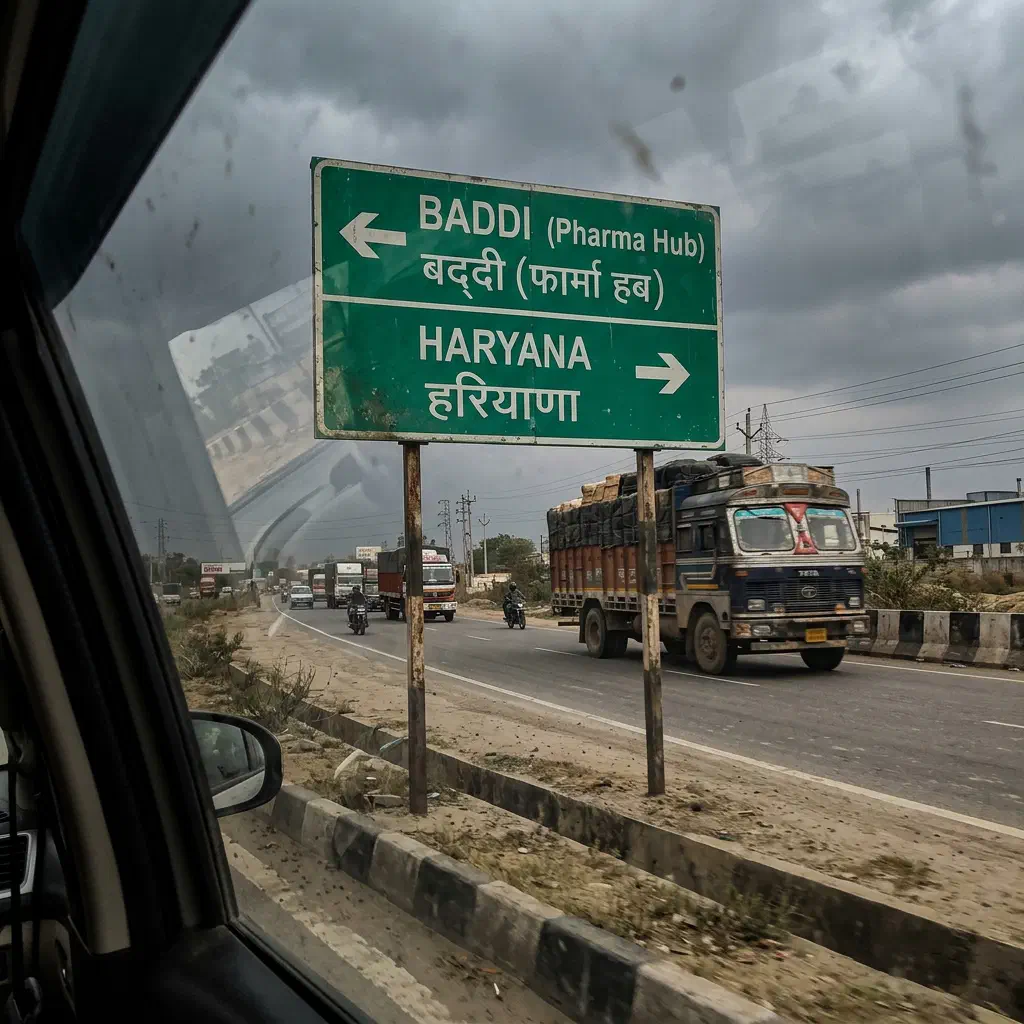
Every few years, another Indian state announces an ambitious pharma manufacturing policy. Haryana’s latest is a serious one on paper — but it’s worth understanding what a policy announcement actually delivers versus what an established hub like Baddi has already built, before it changes how you think about where to manufacture.
What Haryana Actually Announced
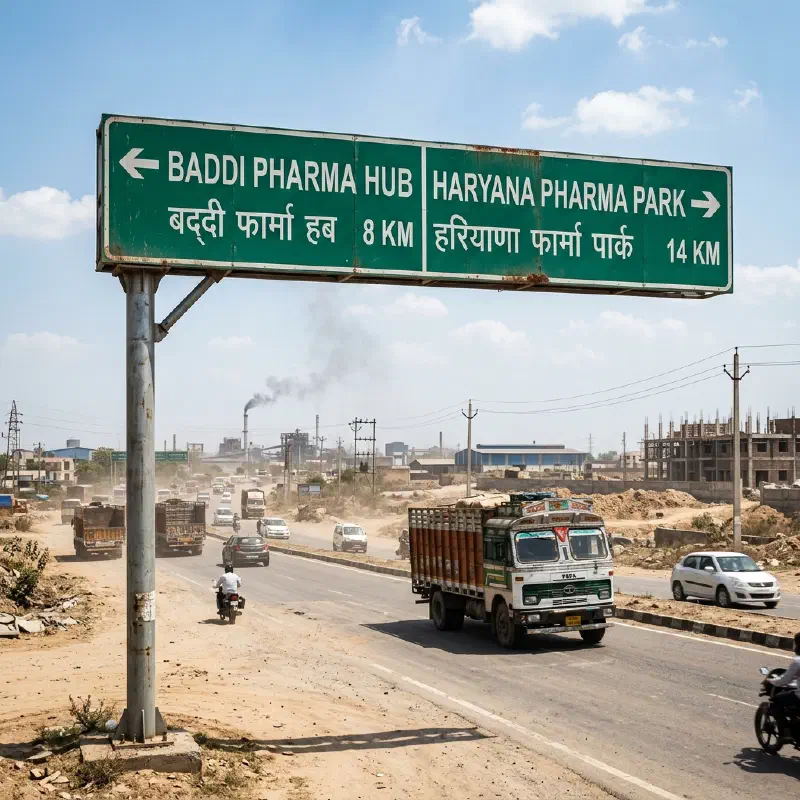
The Haryana Pharmaceutical and Medical Devices Manufacturing Policy 2026 targets ₹10,000 crore in investment over the next five years and aims to create approximately 20,000 jobs, while strengthening pharmaceutical and medical devices manufacturing across the state. The stated goals include promoting advanced manufacturing infrastructure, encouraging innovation, and supporting production of high-value healthcare products — positioning Haryana as part of India’s broader push to strengthen its competitiveness as a global pharmaceutical manufacturing hub.
Why a Policy Announcement Isn’t the Same as a Manufacturing Ecosystem

This is the distinction that actually matters for a brand owner evaluating where to manufacture. An investment target and a job creation goal describe an intention — they don’t describe the dense, interlocking supply chain that makes a manufacturing hub genuinely efficient today.
Baddi’s real advantage was never primarily about the original tax incentives — those were largely neutralized once GST rolled out. What survived, and what actually matters now, is the ecosystem built over roughly two decades:
| Ecosystem Element | What It Takes to Build | Baddi’s Current Position |
|---|---|---|
| Qualified API suppliers within reach | Years of vendor relationships and quality track records | Deep, established network |
| Specialized packaging vendors | Sustained local demand to justify investment | Wide range of custom and stock options |
| NABL-accredited testing labs | Investment justified only by sufficient regional demand | Multiple established labs |
| Trained pharmaceutical workforce | A generation of accumulated technical expertise | Two decades of skill development |
What This Means for Your Manufacturing Decision Today
View manufacturing details for paracetamol-suspension-manufacturing
Competition Is Ultimately a Good Sign for the Industry
None of this is a knock on Haryana’s ambitions — more state-level investment in pharmaceutical manufacturing infrastructure is broadly positive for the industry’s long-term capacity and resilience, and aligns with the sector’s overall growth trajectory. It simply doesn’t change the near-term calculus for a brand owner who needs a reliable manufacturing partner now, not five years from now.
How Saar Biotech Fits Into This Picture
Operating 4 specialized manufacturing units in the heart of Baddi, we benefit directly from the ecosystem density that took two decades to build — faster raw material procurement, established packaging vendor relationships, and a workforce with deep, hands-on pharmaceutical manufacturing experience. For our 2100+ partner brands, this translates into shorter lead times and more predictable execution than a newly developing manufacturing region can currently offer.
Conclusion
New pharma manufacturing policies like Haryana’s are a genuine sign of the industry’s growth trajectory — but a five-year investment target is not the same thing as a functioning manufacturing ecosystem. For brand owners making a decision today, established hubs with proven supply chain depth and regulatory track records remain the lower-risk choice, while newer regions mature over the years ahead.
Ready to work with an established, ecosystem-backed manufacturing partner?