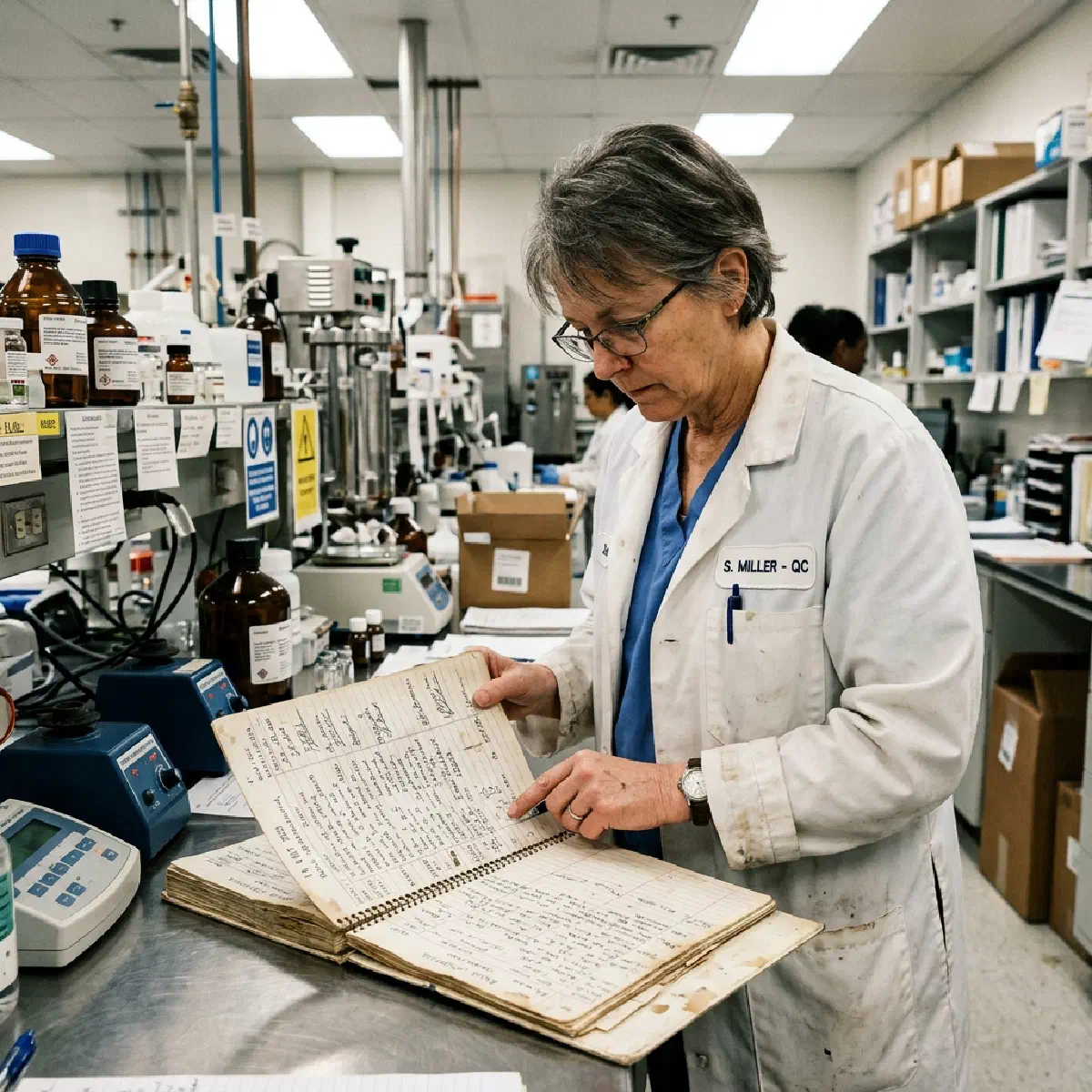
Choosing a third-party pharmaceutical manufacturer is one of the highest-stakes decisions a pharma marketing company makes — not because the decision is complex, but because the consequences of getting it wrong are disproportionately severe. A bad product batch doesn’t just lose you money; it can trigger regulatory action, product recalls, and permanent damage to physician trust in your brand.
The good news is that a structured evaluation process eliminates most of the risk before it happens. This is that process — written for a buyer who wants to use it on a phone call or during a facility visit, not as a theoretical framework.
Before this checklist: If you haven’t yet covered the regulatory basics of third-party manufacturing — loan license, drug licensing, Schedule M compliance — see our Complete Guide to Starting Third-Party Pharma Manufacturing first. For certification-specific verification (WHO-GMP, Schedule M, ISO), see our Certification Guide for Pharma Buyers.
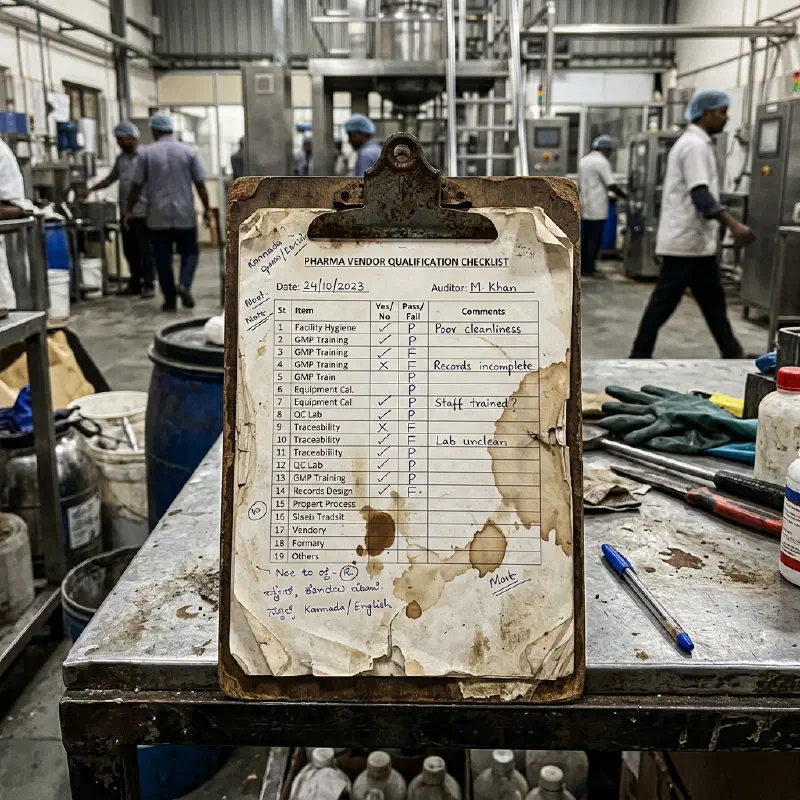
Phase 1: Desk Audit (Before You Visit or Pay Anything)
The cheapest and fastest due diligence happens before you leave your desk. These steps should be completed before scheduling a facility visit, and absolutely before any financial commitment.
Step 1: Verify the Drug Manufacturing License
This is not optional. Go to the state drug authority’s online portal for the manufacturer’s state (e.g., HP State Drug Controller for Baddi manufacturers) and look up the license number they’ve provided. Confirm:
- License number is valid and currently active
- License holder name matches the company you’re in discussion with
- Dosage form categories covered include your product type (liquids, semi-solids, tablets — each requires a separate category on the license)
- Expiry date has not passed
This takes five minutes. Skipping it is not a time-saving measure — it’s the single largest preventable risk in CMO selection.
Step 2: Check the WHO-GMP Certificate Scope
A WHO-GMP certificate that covers “oral liquids” does not automatically cover “parenteral liquids” or “nasal sprays.” Read the scope page carefully. Confirm:
- Certificate is current (not expired)
- Dosage forms covered match your product
- Issuing authority is a recognised state drug authority (not a private certification body — WHO-GMP is issued by drug authorities, not ISO-style bodies)
Step 3: Request These Documents Upfront
DOCUMENTS TO REQUEST BEFORE YOUR FACILITY VISIT

☠Current Drug Manufacturing License (scan of physical license)
☠WHO-GMP Certificate (current, with scope page)
☠ISO 9001:2015 Certificate (verify with issuing body if in doubt)
☠Sample Certificate of Analysis — from a similar product
☠Sample Batch Manufacturing Record page — even a redacted one
☠Company profile listing current product categories in production
☠Two or three client references (names + phone numbers)
A manufacturer who hesitates, deflects, or offers to show these only during the visit has already given you useful information about their transparency.
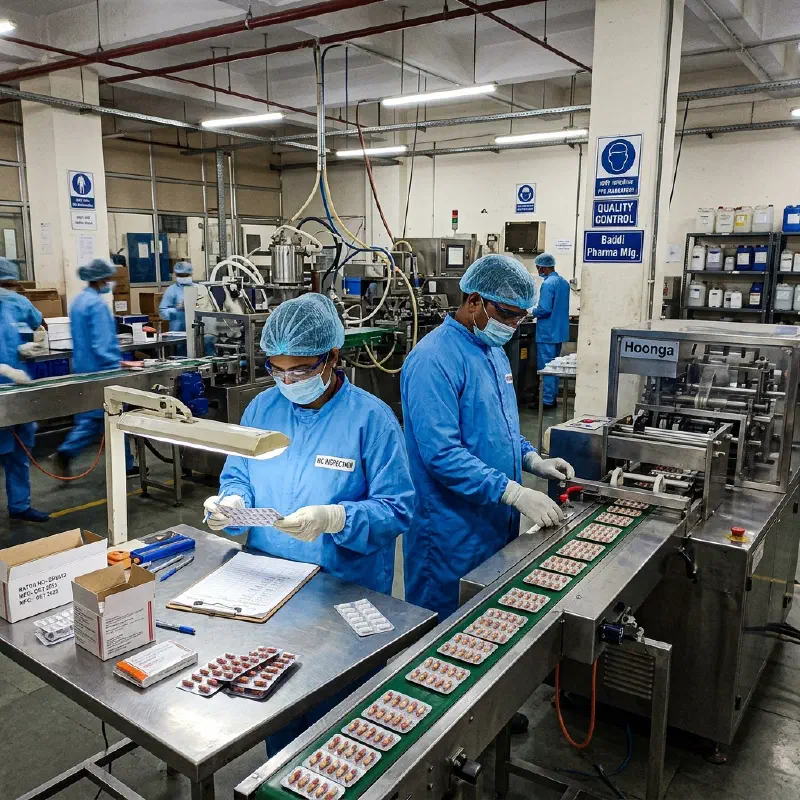
Phase 2: Facility Audit Checklist
If documents check out, visit the facility. This is a working audit, not a factory tour — you’re verifying that what the certificates say matches what’s actually happening on the production floor.
FACILITY AUDIT CHECKLIST — THIRD-PARTY MANUFACTURER EVALUATION

DOCUMENTATION & COMPLIANCE
☠Drug manufacturing license physically displayed and current
☠SOP register maintained, approved, and accessible to staff
☠Change control records available for review (last 6 months)
☠Deviation and CAPA logs — are there entries? (No deviations = a red flag)
☠Environmental monitoring logs current

MANUFACTURING AREA
☠Positive/negative pressure differentials maintained and logged
☠HVAC validation records current
☠Cleanroom gowning procedures followed by actual staff (not just documented)
☠Segregation: beta-lactam / non-beta-lactam if applicable
☠Cleaning validation SOPs in place and followed

QUALITY CONTROL LABORATORY
☠HPLC calibration records current
☠Reference standard management system in place and documented
☠Analyst training records maintained
☠OOS (Out-of-Specification) procedure posted and understood by staff
☠In-house testing for standard assay and microbial limits (not outsourced)

WAREHOUSE & MATERIALS
☠Temperature-controlled storage for thermolabile items — with data loggers
☠Quarantine area clearly marked and locked (not just labelled)
☠Approved Vendor List (AVL) accessible and maintained
☠Raw material testing records available and matched to manufacturing batches
Phase 3: The Questions That Actually Reveal Capability
Beyond the paperwork, ask these questions directly in conversation. The quality of the answer is as diagnostic as the answer itself.
| Question | What a Good Answer Sounds Like | Red Flag Answer |
|---|---|---|
| “Can you show me a BMR from a similar product?” | Produces one within minutes, walks you through it | “Those are confidential” / “I’ll send it later” |
| “How do you handle an Out-of-Specification result?” | Describes Phase 1/Phase 2 investigation, quarantine, CAPA process specifically | “We re-test until it passes” |
| “What API vendors do you use for [my molecule]?” | Names specific vendors, mentions AVL, explains qualification criteria | “We use good vendors” / vague |
| “What’s your current capacity utilisation?” | Gives a number; explains production scheduling honestly | Refuses to answer or claims 100% available |
| “Can I speak to one of your current clients?” | Provides contact without hesitation | Declines, delays, or provides unverifiable references |
Phase 4: Category Fit — Are They Actually Right For Your Product?
A manufacturer can pass every document check and still be the wrong partner for your specific product. Category fit means confirming that the manufacturer has relevant, validated experience with your dosage form — not just that their license technically covers it.
Ask specifically:
- Have you produced this exact dosage form before? (Nasal spray ≠ liquid oral; ointment ≠ cream)
- Do you have validated formulations in this product category? (For an already-approved molecule)
- What’s your batch record count for this dosage form in the last 12 months? (Frequency of production affects line familiarity and troubleshooting speed)
- Do you have stability data for this dosage form that I can use for my drug license filing?
View our manufacturing capabilities for Liquid Orals & Nasal Sprays · Topicals & Semi-Solids View our Quality Control approach · Certification Verification Guide Saar Biotech Manufacturing Unit · DM Pharma (Solid Dosage)
Before You Sign: The Commercial Terms Checklist
COMMERCIAL DUE DILIGENCE — BEFORE SIGNING A MANUFACTURING CONTRACT

INTELLECTUAL PROPERTY
☠Who owns the formula and dossier? (Should be you, or you should have rights)
☠Is your formulation exclusive to your brand, or can they produce it for competitors?

QUALITY GUARANTEES
☠COA format specified and sample agreed
☠BMR copy to be provided with each batch
☠Rejection and replacement terms clearly stated

COMMERCIAL TERMS
☠Per-unit pricing agreed in writing with validity period
☠MOQ confirmed per SKU, per pack size
☠Lead time guarantee with penalty clause for delay
☠Advance payment terms (standard: 50% on order, 50% before dispatch)

REGULATORY SUPPORT
☠Manufacturer will issue NOC for your drug license application
☠Manufacturer will provide technical dossier support (stability data, BMR format)
☠Agreed process for regulatory inspections: manufacturer's obligation to cooperate
How Saar Biotech Approaches Partner Evaluation
We treat every one of the questions above as things a prospective client should be able to ask us directly — and get specific, documented answers to immediately. Our license, certificates, sample COAs, and a redacted BMR sample are available on request before any facility visit. We welcome independent audits from B2B partners as a standard part of how trust is established.
Our full quality system — raw material qualification, in-process controls, batch release process, data integrity practices — is detailed in our Quality Control Guide. Read it before your facility evaluation; it’s what we actually do, not a brochure version.
Conclusion
Choosing a third-party manufacturer doesn’t require luck or gut feel — it requires a structured process that verifies the right things in the right sequence. Verify the license before the visit. Ask the specific questions during the visit. Check references before the contract. And don’t pay an advance before you’ve completed all three steps.
The manufacturers who pass this evaluation confidently are the ones worth partnering with. The ones who don’t will reveal themselves quickly through evasiveness, vagueness, or documents that don’t match what they claimed.
Ready to evaluate Saar Biotech for your manufacturing partnership?