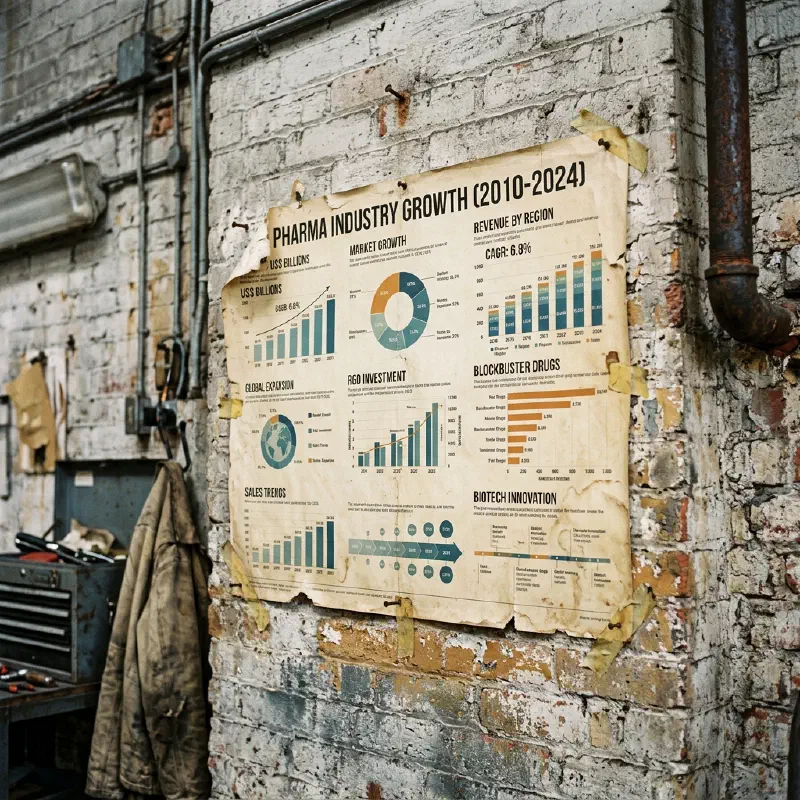
The numbers are staggering — and they are real. According to the Ministry of Commerce & Industry, India’s pharmaceutical sector has grown from $20 billion in 2014 to nearly $60 billion today, and is firmly on track to hit $130 billion by 2030.
As noted by government officials and the Ministry of Commerce, India is rapidly moving beyond its traditional strength in generic medicines. The strategic focus is shifting heavily toward research, innovation, and the production of high-value pharmaceutical products.
For third-party contract manufacturers—especially those operating in Baddi, Himachal Pradesh, the beating heart of India’s formulation industry—this explosive growth presents unprecedented opportunities, alongside a fierce new regulatory reality.
Here is what the 2026–2030 boom means for Baddi-based manufacturing and how pharma brand owners must adapt.
The 2030 Growth Trajectory: By the Numbers
A Consistent, Double-Digit Climb
The momentum is broad-based and sustained. The Indian Pharmaceutical Market (IPM) recently posted a 12.1% year-on-year growth, marking the sixth consecutive month of double-digit expansion. This isn’t just incremental growth; it represents a fundamental shift in global reliance on Indian manufacturing.
Where the Money is Going
| Growth Metric | 2014 Benchmark | Current Phase (2026) | Projected Trajectory (2030) |
|---|---|---|---|
| Total Industry Value | $20 billion | ~$60 billion | $130 billion |
| Pharma Export Value | $14 billion | ~$31 billion | $50 billion |
| Global Formulation Share | ~15% by volume | ~22% by volume | ~28% by volume |
| Domestic Market Size | $6 billion | ~$29 billion | $80 billion |

Market Dynamics: The “GLP-1 Spillover” Effect
Baddi houses over 1,000 formulation units, creating an unmatched supply chain ecosystem. But the type of manufacturing happening here is shifting rapidly due to global pressures.
Why Capacity is Suddenly Scarce
Demand for GLP-1 weight-loss drugs (like semaglutide) is exposing severe capacity gaps across India’s top CDMOs for sterile fill-finish facilities and peptides. This is creating a massive spillover effect. Large pharmaceutical companies are aggressively outsourcing their standard dosage forms to third-party manufacturers in Baddi to free up their own internal capacity for complex injectables.
Industry leaders from major specialty pharma companies have publicly warned that the market will soon be constrained by supply capacity, not patient demand.
Securing Manufacturing Slots Early
Brand owners are now actively locking in manufacturing capacity for high-margin alternatives before the supply crunch deepens. As noted by industry experts:
Prominent Indian pharmaceutical executives have noted that brand owners are already securing future manufacturing slots well in advance, even before final regulatory approvals are granted.
For example, production of these categories is shifting heavily to specialized Baddi plants:
The Regulatory Landscape: Quality is Not Optional
The government has made its stance clear: rapid scale cannot come at the cost of patient safety.
A Strict Approach to GMP
Upgraded Regulatory Oversight
To enforce this, CDSCO has continually strengthened its presence, with the Baddi office now operating as a full Zonal Office with sweeping administrative powers over the entire region. Regulatory oversight is now localized, hyper-focused, and heavily reliant on Risk-Based Inspections (RBI).
For pharma brands, the takeaway is absolute: Partnering with a non-compliant CMO is brand suicide. WHO-GMP certification is no longer a marketing tool; it is a prerequisite for survival.
How Saar Biotech is Engineered for the 2030 Boom
As a WHO-GMP and ISO 9001:2015 certified manufacturer operating 4 specialized units in the heart of Baddi, Saar Biotech is built for this exact market evolution.
Focusing on Specialty Products
While much of the industry focuses on crowded, low-margin tablet manufacturing, we have invested heavily in high-margin specialty dosage forms that differentiate modern brands.
Launching Faster in a Tight Market
With over 240 formulations already developed and stability-tested, we help brands launch new products in 30-45 working days. Our high-volume staples include:
The industry is doubling. Make sure your manufacturing partner has the capacity, compliance, and capabilities to scale with you.