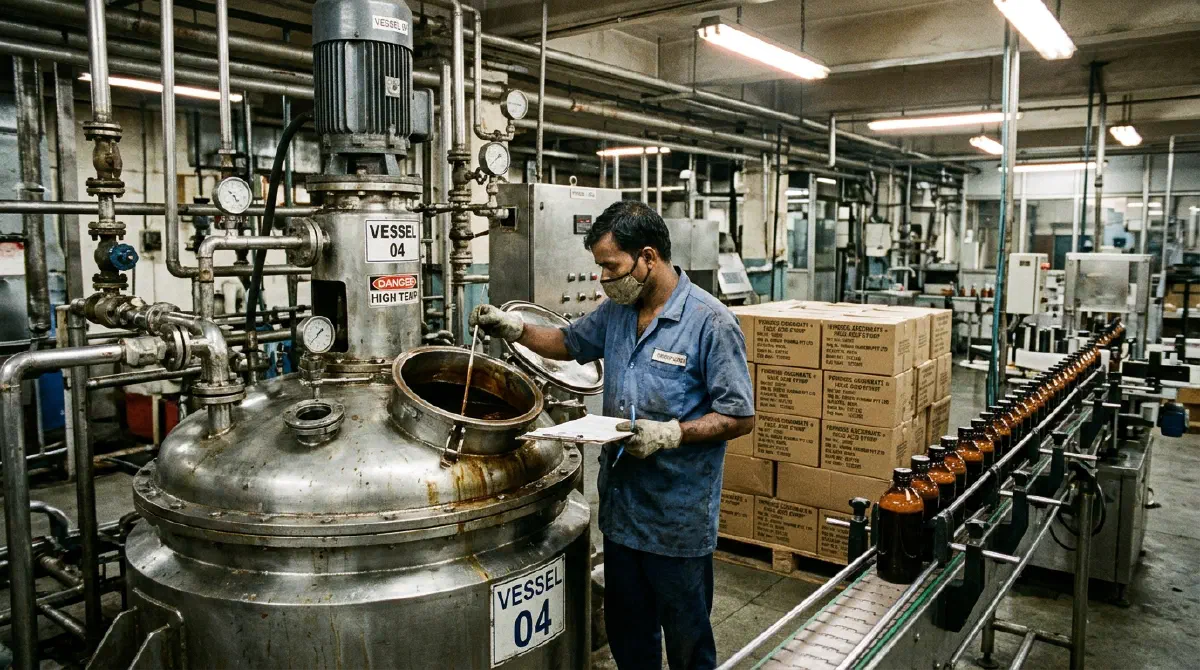
Strategic Overview: The Perpetual Market Demand for Haematinic Syrups
Iron deficiency anaemia (IDA) represents India’s most widespread nutritional disorder, affecting more than 57% of women of reproductive age (15–49 years) and 67% of children under 5 years according to the National Family Health Survey (NFHS-5). Consequently, oral haematinic formulations constitute one of the top five highest-volume product classes across primary and secondary healthcare centers.
Commercial blockbuster brands like Orofer XT (Emcure), Chericof-style brand positioning, and Fefol-Z demonstrate that prescribers seek reliable, patient-tolerated iron formulations. For emerging pharmaceutical marketers and PCD franchise networks, launching a high-absorption Ferrous Ascorbate + Folic Acid Syrup provides an evergreen, recession-proof revenue foundation.
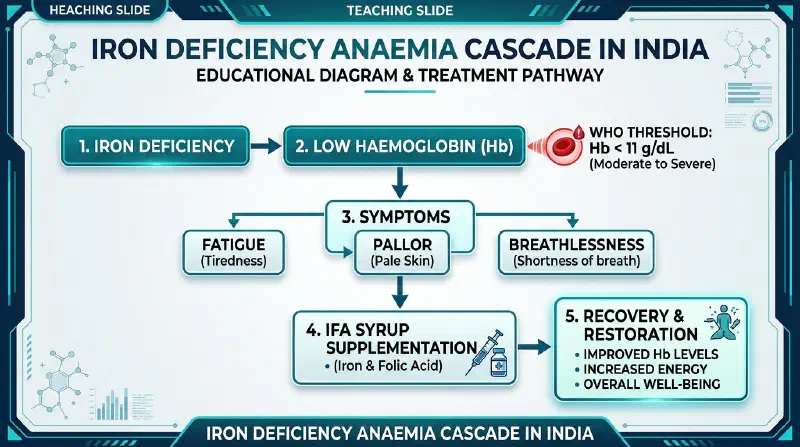
1. Clinical Rationale & The Anaemia Cascade in India
To build an effective detailing strategy for medical representatives visiting gynecologists, pediatricians, and consulting physicians, brand owners must understand the clinical cascade that drives sustained iron supplementation:
Key Clinical Drivers for Prescribers:
- Gestational Demands: Maternal blood volume expands by ~50% during pregnancy, requiring 800–1000mg of additional elemental iron for fetal development and placental growth.
- Folic Acid Synergy: Folic acid (Vitamin B9) is essential for purine synthesis and red blood cell maturation. Combining active folate with bivalent iron simultaneously prevents megaloblastic and microcytic hypochromic anaemias.
- Rapid Reticulocyte Response: Clinically proven to raise serum haemoglobin by 1.5 to 2.0 g/dL within 3 to 4 weeks of compliant daily therapy.
- Adolescent & Pediatric Nutrition: Supports cognitive development, scholastic stamina, and immune resistance in growing school-age children who cannot swallow tablets.
2. Salt Selection: Ferrous Ascorbate vs. Legacy Iron Salts
A major reason why cheap iron syrups fail commercially is poor patient compliance due to metallic regurgitation and gastric distress. Selecting the right iron moiety determines clinical repeat prescriptions:
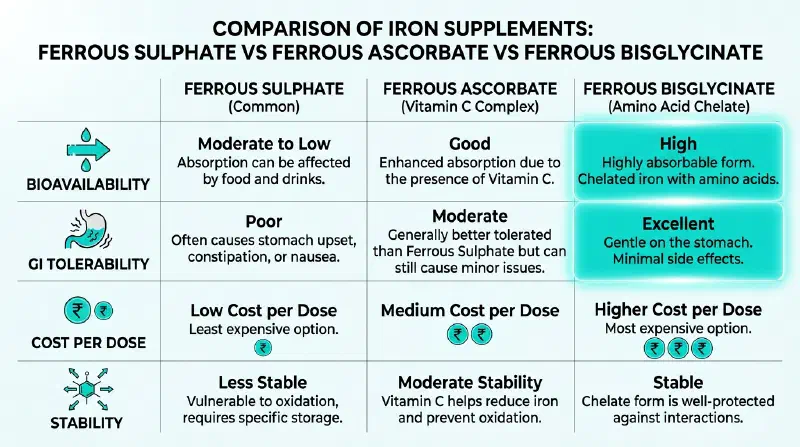
| Performance Parameter | Ferrous Sulphate | Ferric Ammonium Citrate (FAC) | Ferrous Ascorbate (Saar Biotech Standard) |
|---|---|---|---|
| Elemental Iron Content | ~20% | ~20.5% | ~30% (Standard 30mg/5ml) |
| Active Iron Valence | Fe²⁺ (Readily oxidizes to Fe³⁺) | Fe³⁺ (Must be reduced before absorption) | Fe²⁺ (Stabilized by Ascorbic Acid ligand) |
| Duodenal Bioavailability | Low to Moderate (10%–15%) | Moderate (12%–18%) | High (30%–40%) — 3x higher than sulphate |
| Incidence of GI Side Effects | High (nausea, constipation, epigastric pain) | Moderate | Minimal (<5% patient-reported distress) |
| Taste & Teeth Staining | Intense metallic taste; black stains | Bitter; moderate staining | Smooth fruit masked; non-staining |
| Market Positioning | Low-cost generic tender supply | Mid-tier OTC and traditional tonics | Premium prescription gynecological standard |
3. Overcoming Critical Liquid Iron Formulation Challenges
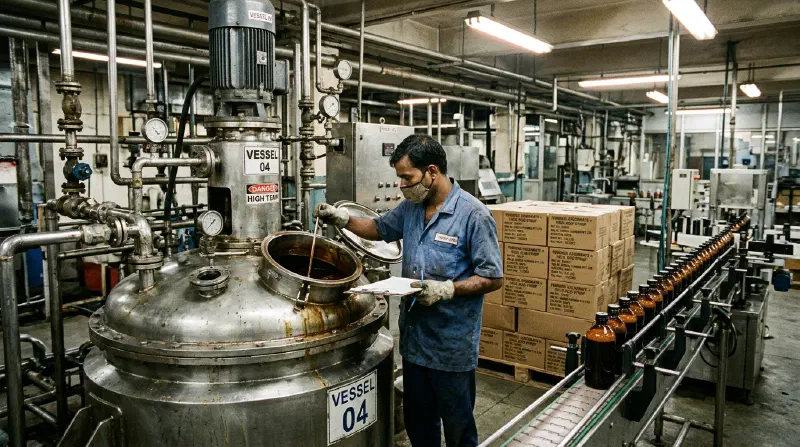
Liquid iron formulations are notoriously difficult to manufacture at scale. Saar Biotech’s formulation laboratories in Baddi have engineered robust solutions to the four most persistent technical hurdles:
A. Preventing Atmospheric Oxidation (Fe²⁺ → Fe³⁺)
When bivalent ferrous iron contacts dissolved oxygen in aqueous syrup, it oxidizes into trivalent ferric iron, forming unsightly dark precipitates of ferric hydroxide. Saar Biotech solves this via:
- Nitrogen Sparging: Displacing dissolved oxygen from purified water and compounding syrup bases using ultra-pure pharmaceutical grade nitrogen gas.
- Synergistic Antioxidant Systems: Calibrated additions of ascorbic acid and sodium metabisulphite maintain a negative oxidation-reduction potential (ORP) throughout the manufacturing run.
B. Masking the Intense Metallic Astringency
Iron ions bind directly to salivary proteins, triggering a severe dry, metallic taste that causes children to spit out doses. We employ:
- Chelation Complexes: Utilizing food-grade complexing agents that shield iron ions from lingual taste buds until swallowed.
- Optimized Flavor Blends: Rich raspberry, wild cherry, and sweet orange-chocolate flavor matrices that completely neutralize metallic lingering notes.
C. Viscosity Control & Sugar-Free Capabilities
- Sugar-Based Syrup: Heavy sucrose vehicle (66.7% w/w IP syrup base) providing natural viscosity, mouthfeel, and osmotic preservative protection.
- Sugar-Free / Sorbitol Base: Specially formulated with non-crystallizing liquid sorbitol (70%) and sucralose for diabetic and gestational diabetic patients who require strict glycemic control.
4. Packaging Engineering & Photolytic Protection
Light exposure accelerates iron oxidation and degradation of folic acid. Saar Biotech offers specialized primary container systems:
- Primary Containers: Amber Polyethylene Terephthalate (PET) or high-density polyethylene (HDPE) bottles in 150ml, 200ml, and 300ml volumes, filtering out 99% of ambient UV wavelengths between 290nm and 450nm.
- Closure Integrity: 28mm pilfer-proof aluminium ROPP caps or ribbed polypropylene screw caps with induction-sealed poly-foil liners to ensure airtight transit integrity.
- Calibrated Dosing: Includes a dishwasher-safe polypropylene measuring cap with clear volumetric graduations (2.5ml, 5ml, 10ml) to eliminate parental dosing guesswork.
- Outer Packaging: 350 GSM SBS / FBB cartons featuring metallic spot UV and anti-counterfeiting holographic elements that reinforce brand prestige on retail chemist shelves.
5. B2B Commercial Economics & PCD Distribution Strategy
Haematinic syrups represent one of the fastest moving SKUs in any PCD pharma franchise or regional pharmaceutical marketing company:
[Saar Biotech Ex-Factory Manufacturing Cost]
                     │
                     ▼  (+ 12% GST & Transport)
       [Brand Owner Landed Cost]
                     │
                     ▼  (+ Brand Gross Margin Pool: 50% – 65%)
       [Stockist / PCD Franchise Net Rate: ₹38.00 – ₹48.00]
                     │
                     ▼  (+ Wholesale Trade Margin: 10% – 12%)
       [Retail Pharmacy Purchase Rate: ₹52.00 – ₹62.00]
                     │
                     ▼  (+ Retail Chemist Margin: 20% – 25%)
       [Maximum Retail Price (MRP): ₹120.00 – ₹160.00 per 200ml bottle]
Strategic Launch Advantages with Saar Biotech:
- Accessible Commercial MOQs: Batch sizes starting at 3,000 to 5,000 bottles for 150ml and 200ml SKUs, preventing unnecessary working capital blockage.
- Regulatory Compliance: Manufactured under revised Schedule M and WHO-GMP protocols with complete validated BMRs, COAs, and accelerated Zone IVb stability data.
- End-to-End Artwork & Packaging Support: In-house regulatory design team assists with brand naming, DCGI labeling compliance, barcode generation, and mono carton styling.
Frequently Asked Questions (B2B Commercial)
Launch Your Haematinic Brand with Saar Biotech
Are you looking to expand your liquid oral portfolio with an advanced, highly bioavailable Ferrous Ascorbate + Folic Acid Syrup? Saar Biotech provides turnkey CDMO and third-party pharmaceutical manufacturing services in Baddi, Himachal Pradesh.
- Review our complete range of Syrups & Suspensions.
- Explore our related Calcium & Vitamin D3 Suspensions.
- Discover our Pediatric Formulations Range.
- Learn more about liquid oral stability in our Comprehensive Quality Control Guide.
- Calculate batch costs and container options on our Interactive B2B Brief Planner.
- Contact our business development team today via our Contact Us Page.