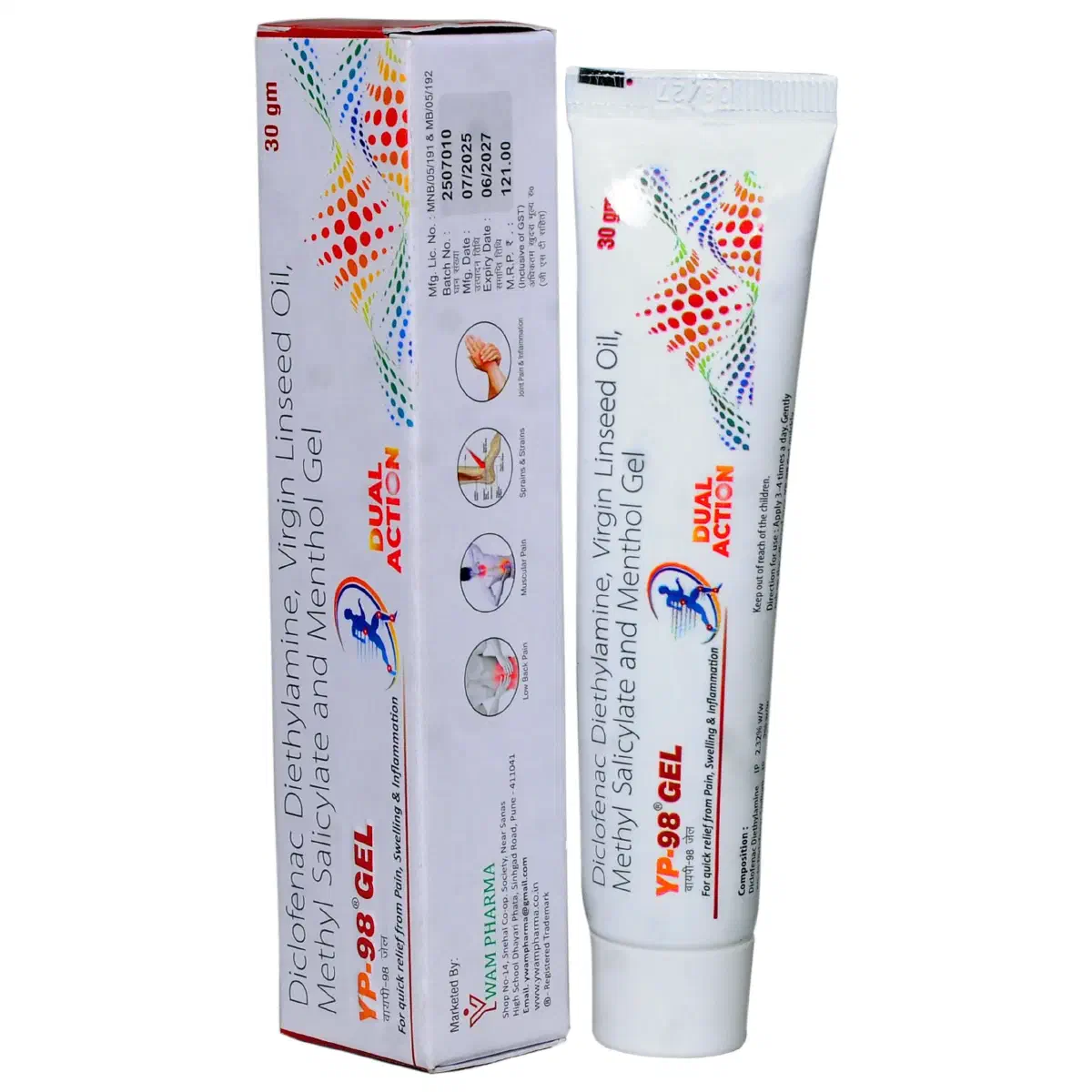
Topicals are one of those categories where buyers and manufacturers often end up talking past each other. A brand owner says “I need a pain gel” — the manufacturer asks “which base, which tube, which API grade, which homogenisation speed?” — and the conversation stalls before a quote is even built. Unlike syrups, where the questions are fairly standard, topical semi-solid manufacturing requires agreement on several formulation and packaging variables before a meaningful price can be given.
This guide is for the buyer who wants to walk into that conversation prepared — knowing what to specify, how pricing is built, and what to check before signing off on a manufacturing contract.
Already have a topical product in mind?
See our Complete Third-Party Manufacturing Guide for the regulatory and contractual fundamentals that apply to all dosage forms, or explore our full Topicals Manufacturing range.
Gel vs Cream vs Ointment: A Commercial and Formulation Decision
The three semi-solid formats are not interchangeable. Each has a distinct manufacturing process, patient experience, and commercial positioning — and choosing the wrong base for your market is a mistake that’s expensive to correct after artwork and tubes are ordered.
| Format | Base Type | Manufacturing Step | Patient Experience | Typical Use Case |
|---|---|---|---|---|
| Gel | Carbomer/HEC in water or hydro-alcoholic | Dispersion + neutralisation | Light, non-greasy, fast-absorbing | Diclofenac pain gels, anti-fungal gels, dermal products requiring quick dry |
| Cream | Oil-in-water or water-in-oil emulsion | Emulsification + homogenisation | Moisturising, smooth application | Steroid-antibiotic combinations, anti-fungal creams, skin-conditioning products |
| Ointment | Petrolatum or wax base (anhydrous) | Melt + mix (no emulsification) | Heavy, occlusive, long contact time | Antifungal ointments, antibiotic ointments, products requiring prolonged skin contact |
The Four Pricing Levers in Topical Manufacturing
A per-tube quote from a topical manufacturer is built from four separate cost layers. Understanding each one lets you compare quotes across manufacturers properly — rather than accepting the headline rate without knowing what’s inside it.
| Pricing Lever | What It Covers | Buyer Control Point |
|---|---|---|
| API / Active Cost | The drug substance itself — the largest variable | API grade (BP/IP/USP) and supplier source affect price significantly |
| Base Cost | Carbomer, petrolatum, emulsifiers, preservatives, humectants | Largely fixed by formulation — you can specify sugar-free/paraben-free but it adds cost |
| Tube & Cap Procurement | LDPE laminate or aluminium tube, screw or flip cap | Tube size and material choice is the second-largest cost variable |
| Batch Size & Conversion | Homogenisation, filling, sealing, labelling, QC | Larger batches reduce per-tube conversion cost — a 10,000-tube batch costs meaningfully less per unit than a 5,000-tube batch |
MOQ: The Tube Vendor Constraint Buyers Miss
The minimum order quantity for topicals is often set not by the manufacturer’s batch minimum — but by the tube supplier’s carton quantity. Tube vendors in India typically supply in cartons of 3,000–10,000 units depending on size; the manufacturer needs to order whole cartons. This creates a practical floor on your MOQ regardless of what you want to test in the market.
| Pack Size | Typical MOQ (Validated Formulation) | Key Driver |
|---|---|---|
| 30g tube | ~5,000–10,000 tubes | Tube procurement minimum + batch tank economics |
| 50g tube | ~5,000–7,500 tubes | Similar driver; fewer tubes per carton at this size |
| 100g tube | ~3,000–5,000 tubes | Larger tubes often available in smaller carton quantities |
These are indicative ranges — exact MOQ depends on your tube type, the manufacturer’s current vendor relationships, and your formulation. Confirm during your product feasibility discussion.
Semi-Solid Manufacturing: What Actually Happens on the Production Floor
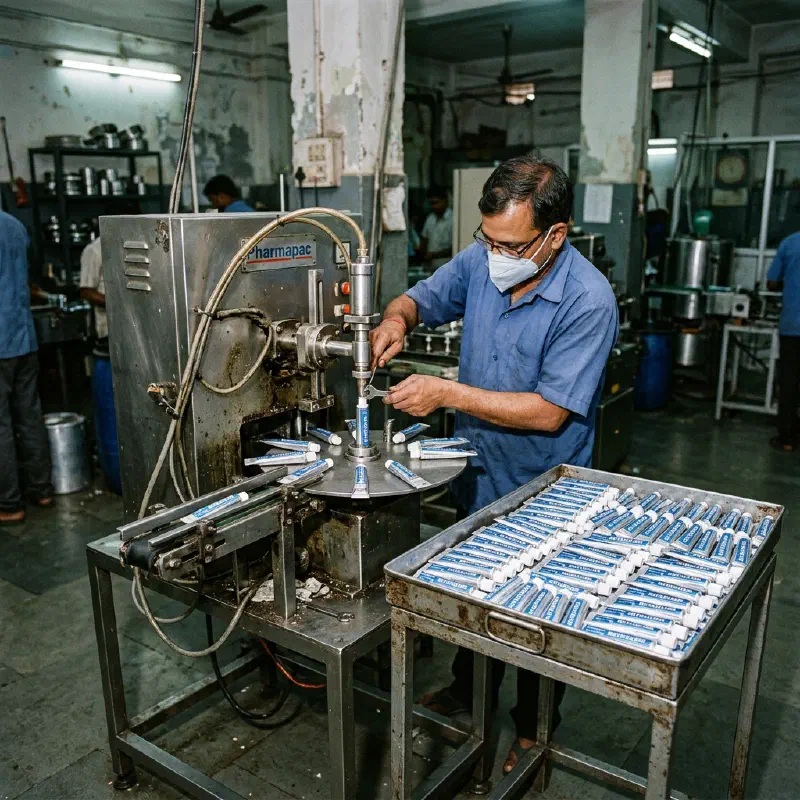
Unlike a syrup — which is primarily a dissolution and mixing process — topical semi-solids require a controlled sequence that’s sensitive to temperature, shear rate, and pH at each stage. Here’s what a standard gel production run looks like:
- Phase Preparation (Day 1): Carbomer or HEC is dispersed slowly in purified water under controlled temperature. Rapid addition causes lumping and incomplete hydration — a common processing error.
- Neutralisation: A neutralising agent (typically triethanolamine or sodium hydroxide) is added to activate the gelling system. pH at this stage determines final viscosity and stability.
- API Incorporation: The active pharmaceutical ingredient — dissolved in its appropriate solvent — is added to the gel base with gentle mixing to avoid shear degradation of the polymer network.
- Homogenisation & De-aeration: The batch is homogenised to ensure complete API dispersion and then de-aerated to remove air bubbles that would cause inconsistent fill weights.
- In-Process QC: pH, viscosity, and visual inspection are performed before the batch proceeds to filling.
- Tube Filling & Sealing: Automated filling lines fill each tube to the target fill weight, heat-seal the crimp end, and code the batch and expiry.
- Finished Product QC: Assay, pH, viscosity, spreadability, microbial limits, and fill weight uniformity are tested before batch release.
View manufacturing details for Diclofenac Diethylamine Combination Gel · Diclofenac Spray · Diclofenac Roll-On
Microbial Limits: Stricter Than Most Buyers Expect
Non-sterile topicals carry a specific microbial risk that’s higher than solid dosage forms — the aqueous base of gels and creams provides a growth-conducive environment if preservative efficacy is inadequate. This is why WHO-GMP and IP specify explicit microbial limits for topical semi-solids.
| Test | Typical Limit (IP/BP) | Equipment |
|---|---|---|
| Total Aerobic Microbial Count (TAMC) | NMT 10² CFU/g | Plate count, incubator |
| Total Yeast & Mould Count (TYMC) | NMT 10¹ CFU/g | Selective agar |
| Staphylococcus aureus | Absent in 1g | Confirmation culture |
| Pseudomonas aeruginosa | Absent in 1g | Confirmation culture |
For products applied near mucous membranes (nasal gels, eye ointments), limits are stricter still and may approach sterile product requirements. Confirm that your manufacturer runs this testing in-house — outsourced microbial testing adds 5–7 days to batch release time and reduces accountability.
View manufacturing details for Clobetasol-Salicylic Acid Ointment · Luliconazole Cream · Mupirocin Ointment
Artwork & Launch Timeline for Topicals
One of the most common causes of delays in topical launches is the artwork approval cycle — specifically, tube printing requires artwork to be confirmed in the tube vendor’s required format (often vector PDF with bleed marks), not just a carton design. Brands that haven’t accounted for this add 1–3 weeks to their first dispatch timeline.
A realistic launch sequence for a validated topical formulation:
- Product brief & feasibility (Week 1): Composition, strength, tube size, quantity, target launch date
- Quote & contract (Week 1–2): Per-tube pricing, MOQ, lead time confirmation
- Artwork approval (Week 2–5): Tube front/back/crimp, inner carton, outer carton — all require separate approval; tube artwork format specifications from the tube vendor must be confirmed first
- Raw material & tube procurement (Week 3–6): API, excipients, and tubes ordered after artwork sign-off
- Production & in-process QC (Week 5–7)
- Finished product QC & batch release (Week 7–8)
- Dispatch (Week 8, or ~30–40 working days from contract execution for a validated product)
How Saar Biotech Approaches Topical Manufacturing
Topicals — gels, creams, and ointments — form part of the specialty formulation capability we’ve deliberately built across our manufacturing units in Baddi. Our semi-solid lines include validated homogenisation and tube-filling capability for products ranging from Diclofenac Diethylamine Gel to Clobetasol-Salicylic Acid Ointment to antifungal creams.
For a brand owner entering topicals for the first time, we work through base selection, tube specifications, and MOQ planning together during the feasibility discussion — so you understand the real cost structure and timeline before committing to a batch.
Browse the complete Topicals & Dermatology range for all available creams, gels, ointments, and lotions.
Conclusion
Topical semi-solid manufacturing rewards buyers who understand the specifics — base selection, tube procurement dynamics, the four pricing levers, and the microbial testing requirements that separate a properly validated product from a batch that passes assay but may not pass a market shelf life. The right conversation with a manufacturer starts not with “what’s your per-tube rate?” but with a clear product brief: base type, tube size, pack quantity, and target timeline.
Ready to discuss your topical formulation?