Strategic Overview: The Booming Indian Topical Antifungal Market
Fungal skin infections (dermatophytosis) have emerged as one of the most widespread outpatient dermatological conditions in India. The tropical climate, high humidity, widespread antibiotic usage, and historical over-prescription of steroid-containing cocktail creams have led to unprecedented prevalence of resistant Tinea cruris (jock itch), Tinea corporis (ringworm), and Tinea pedis (athlete’s foot).
For pharmaceutical brand marketers and PCD distributors, entering the dermatology segment with evidence-backed, high-efficacy antifungal creams is a highly profitable, recurring revenue stream.
1. Clinical & Commercial Comparison: The “Big 3” Antifungal Creams
Selecting the right antifungal molecule depends on your brand’s clinical positioning and target prescriber demographic:
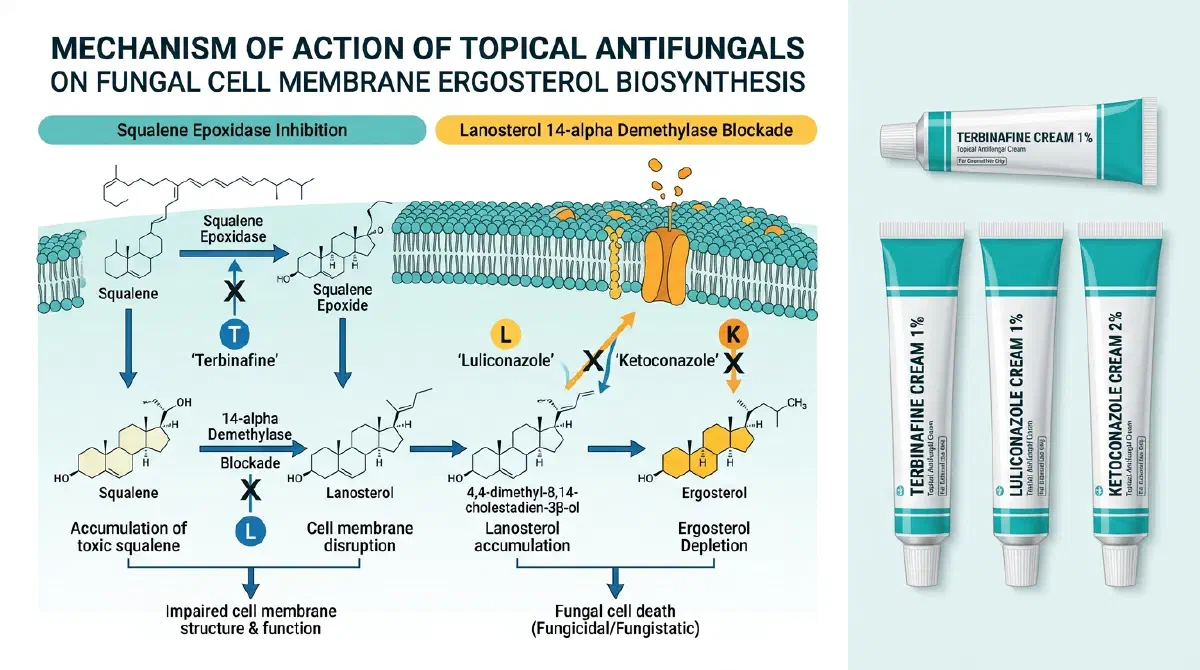
| Molecule & Strength | Drug Class | Biochemical Target | Key Clinical Advantage | Target Prescribers | Typical Pack Sizes |
|---|---|---|---|---|---|
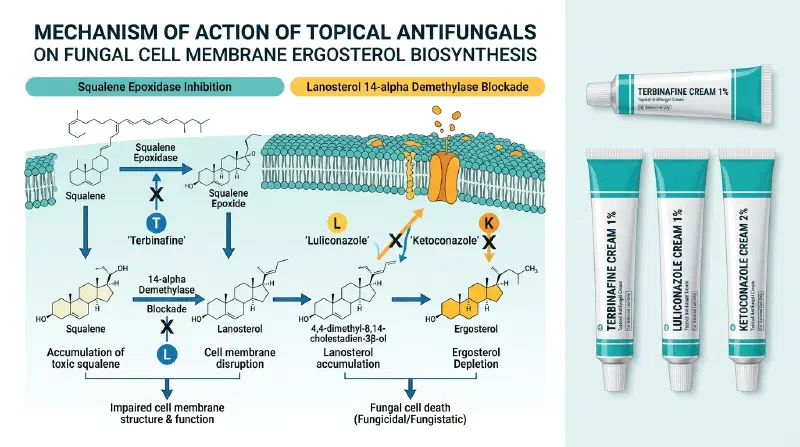
| Luliconazole 1% w/w | Imidazole | Lanosterol 14-$\alpha$ Demethylase | Rapid 1–2 week cure; highest tissue retention | Dermatologists, Skin Specialists | 10g, 20g, 30g, 50g |
| Terbinafine HCl 1% w/w | Allylamine | Squalene Epoxidase | Fungicidal cell lysis; low recurrence rates | General Physicians, Dermatologists | 15g, 30g |
| Ketoconazole 2% w/w | Imidazole | Lanosterol 14-$\alpha$ Demethylase | Superior anti-yeast activity (Malassezia seborrhea) | Cosmetologists, Dermatologists, GPs | 20g, 30g, 50g |
Why Luliconazole 1% is the Premium Growth Driver
Luliconazole possesses a unique chiral structure with an optically active (R)-enantiomer and an incorporated dithiolane ring. This confers extraordinary binding affinity to fungal cytochrome P450, requiring significantly lower minimum inhibitory concentrations (MICs) than clotrimazole or miconazole — resulting in high patient adherence and fast visible symptom clearance.
2. Advanced Topical Compounding & Homogenization Technology
Formulating premium derma creams requires specialized pharmaceutical engineering to guarantee optimal skin penetration without greasy or sticky residues:
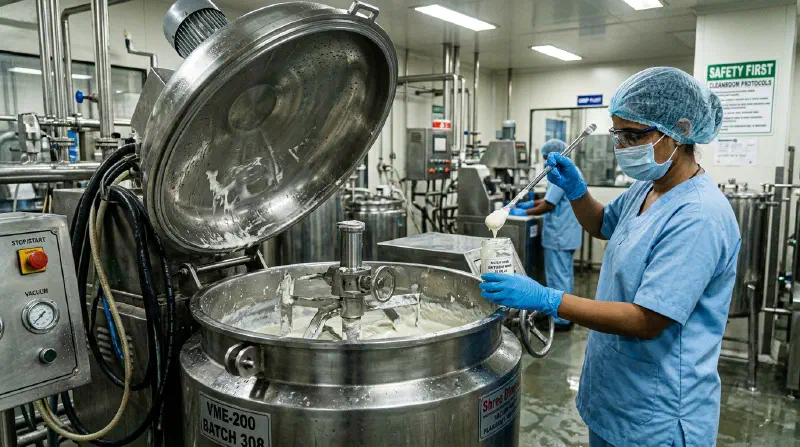
- Micro-Emulsion Technology: In-line high-shear homogenization creates sub-micron droplets, ensuring the active antifungal API permeates deep into the stratum corneum.
- Non-Greasy Elegant Base: Formulated in a vanishing cream base that absorbs rapidly, leaves no white residue, and resists staining clothing — critical for hot and humid Indian summers.
- Controlled Viscosity & Spreadability: Stringently checked via cone-and-plate rheology to ensure smooth extrusion from the tube without separation across extreme storage temperatures.
3. Packaging Engineering: Aluminum vs Laminated Multi-Layer Tubes
Packaging integrity directly impacts chemical stability and consumer shelf appeal:
| Feature | Collapsible Aluminum Tubes | Laminated Multi-Layer (Lami) Tubes |
|---|---|---|
| Barrier Protection | 100% barrier against oxygen, light, and moisture | Multi-layer EVOH barrier offering excellent protection |
| Suck-Back Prevention | Zero suck-back (tube collapses as cream is dispensed) | Elastic memory with spring-back aesthetic retention |
| Internal Lining | Double epoxy-phenolic internal lacquer prevents API interaction | Inherent inert polymer contact layer |
| Branding Quality | Clean clinical metallic finish with precise offset printing | High-gloss photographic printing and holographic security |
4. CDSCO Regulatory Directives: Moving Away from Irrational Cocktails
The Drugs Controller General of India (DCGI) has intensified scrutiny against irrational fixed-dose combination (FDC) topical creams containing super-potent steroids (such as clobetasol) combined with antifungals and antibacterials.
Dermatologists across India are actively abandoning triple-cocktail creams in favor of pure, targeted single-molecule antifungal therapy (Luliconazole or Terbinafine) to prevent steroid-induced rosacea, skin atrophy, and fungal recalcitrance. Brand marketers focusing on pure antifungals enjoy strong ethical prescription backing from top dermatology clinics.
5. Commercial Economics & Third-Party Manufacturing at Saar Biotech
Launching your dermatology brand with Saar Biotech provides clear operational advantages:
- Commercial Batch MOQs: Accessible batch sizing starting at 5,000 to 10,000 tubes, allowing lean initial inventory commitments.
- Distributor Profit Margins: High-margin realization ranging from 55% to 70% for PCD franchise partners and marketing companies.
- Rapid Turnaround: Standard formulation dossiers, ready artwork templates, and complete regulatory support ensure swift dispatch from our WHO-GMP certified Baddi facility.

Frequently Asked Questions (Derma Commercial)
Partner with Saar Biotech for Topical Antifungal Manufacturing
Looking to launch Luliconazole 1%, Terbinafine 1%, or Ketoconazole 2% Cream under your proprietary pharmaceutical label?
- Review product specifications on our Luliconazole Cream Product Page.
- Check our Ketoconazole Cream Manufacturing Details.
- Explore our full Creams & Topicals Manufacturing Portfolio.
- Determine batch sizing and manufacturing costs with our Interactive Brief Planner.
- Request a tailored commercial quote via our Contact Us Page.
- Review our quality standards on the WHO-GMP Compliance Overview.