Dermatology is one of the most commercially attractive categories in Indian pharma manufacturing — skin conditions are pervasive, often chronic, and the prescription-repeat pattern means a dermatologist who trusts your cream writes it for dozens of patients over months and years.
The challenge for a new brand entering derma isn’t finding prescribers — it’s choosing the right products to lead with and sequencing the portfolio for maximum physician adoption. This guide maps the key derma formulations, explains the commercial logic behind each, and recommends a launch sequence for brands building their first dermatology range.
For topical manufacturing fundamentals — base selection, tube economics, microbial testing, and MOQ — read our Topicals Manufacturing Guide first. For the full topical product range, see our Topicals Manufacturing category.
Segment 1: Antifungal Preparations (The Highest-Volume Entry Point)
Antifungal infections — tinea corporis (ringworm), tinea pedis (athlete’s foot), tinea cruris (groin), pityriasis versicolor, cutaneous candidiasis — are among the most common dermatological presentations in Indian outpatient practice. India’s warm, humid climate makes antifungal prescribing a year-round, high-volume activity.
| Product | Active | Clinical Positioning | First vs Second Launch |
|---|---|---|---|
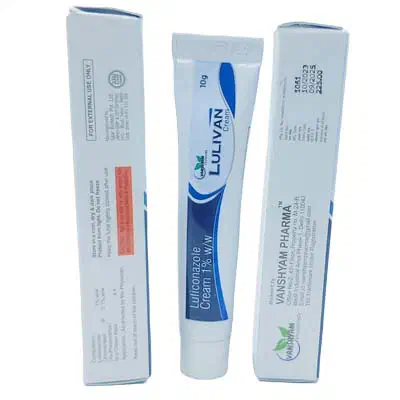
| Luliconazole 1% Cream | Luliconazole | Premium: shorter treatment duration, higher cure rates, differentiated for specialist prescribing | First — if targeting dermatologists |
| Terbinafine 1% Cream | Terbinafine | Mid-tier: allylamine class, strong dermatophyte activity, good GP and dermatologist familiarity | First — versatile across GP and specialist |
| Ketoconazole 2% Cream | Ketoconazole | Established: broad spectrum including seborrhoeic dermatitis, lower cost, high GP prescribing | First — if targeting cost-sensitive GP market |
Also available: Luliconazole Lotion for scalp and widespread tinea presentations.

Segment 2: Steroid + Antibiotic + Antifungal Combinations (The Workhorse Category)
The triple-combination cream — a corticosteroid (for inflammation and itch), an antibiotic (for secondary bacterial infection), and an antifungal (for fungal component) — is one of the most widely prescribed products in Indian dermatology and general practice. Mixed skin infections, where the clinical picture includes inflammation, bacterial, and fungal components simultaneously, are extremely common in India’s climate.
| Product | Combination | Clinical Use |
|---|---|---|
| Clobetasol + Neomycin + Miconazole + Chlorocresol Cream | Potent steroid + antibiotic + antifungal | The dominant combination for mixed skin infections — broad spectrum, rapid itch and inflammation relief |
| Beclomethasone + Clotrimazole Cream | Moderate steroid + antifungal | For presentations where potent steroid is not required — paediatric use, facial infections, longer-term use |
| Clobetasol + Salicylic Acid Ointment | Potent steroid + keratolytic | Psoriasis, severe seborrhoeic dermatitis — keratolytic action for scale removal before steroid absorption |
Segment 3: Antibacterial Ointments (Wound Care and Infection Treatment)
Antibacterial ointments occupy a distinct clinical segment — wound care, infected eczema, impetigo, post-procedure skin protection — where a dermatologist’s trust in product quality directly affects patient outcomes.
| Product | Active | Clinical Use |
|---|---|---|
| Mupirocin 2% Ointment | Mupirocin | Impetigo, infected wounds, nasal decolonisation — high-specificity antibiotic with low resistance rates |
| Povidone Iodine + Ornidazole Ointment | PVP-I + Ornidazole | Wound care with anaerobic infection risk — surgical wound dressing, diabetic foot infections |
Also available: Povidone Iodine + Ornidazole Ointment
Segment 4: Soothing, Emollient & Protective Preparations
Calamine-based and emollient preparations sit at the prescription-OTC boundary — some are prescribed for eczema, contact dermatitis, and sunburn; others are purchased at pharmacy for routine skin care. The prescribing relationship is less specialist-driven than antifungals or steroids, making this segment more suitable for pharmacy-led distribution.
| Product | Combination | Clinical Use |
|---|---|---|
| Calamine + Allantoin + Vitamin E Lotion | Soothing + healing agents | Eczema, contact dermatitis, heat rash, sunburn — broad-spectrum soothing |
| Zinc Oxide Cream | Zinc Oxide | Nappy rash, minor wounds, skin protection — paediatric and primary care |
| Hydroquinone + Tretinoin + Mometasone Cream | Depigmenting combination | Melasma, hyperpigmentation — growing cosmetic dermatology segment |
Recommended Derma Launch Basket
For a brand building its first dermatology portfolio, this 4-SKU basket covers the broadest range of dermatological presentations with the least portfolio overlap:
| SKU | Product | Why It’s First |
|---|---|---|
| 1 | Luliconazole 1% or Terbinafine 1% Cream | Antifungal anchor — highest-volume indication, strong differentiation story |
| 2 | Clobetasol + Neomycin + Miconazole + Chlorocresol Cream | Broadest mixed-infection coverage — written by virtually every GP and dermatologist |
| 3 | Mupirocin 2% Ointment | Wound care and bacterial infection — different indication, different prescribing trigger |
| 4 | Calamine + Allantoin + Vitamin E Lotion | Soothing preparation — prescription + OTC, pharmacy-stocking product, adds channel depth |
This basket gives a brand representative a product for every common dermatological presentation on a typical prescription pad — antifungal, mixed infection, wound care, and soothing — without duplicating clinical indication across SKUs.
Browse the full Topicals Manufacturing range for the complete dermatology product catalogue.
Conclusion
Dermatology is a category where brand loyalty is built on texture, smell, patient feedback, and dermatologist confidence in product quality — not just on the active ingredient. Two Clobetasol + Miconazole creams with identical composition can have completely different prescription retention based on how the cream feels on application. Getting the formulation right — base selection, emulsifier system, fragrance, skin feel — is as important as the regulatory compliance.
Ready to build your dermatology product range?