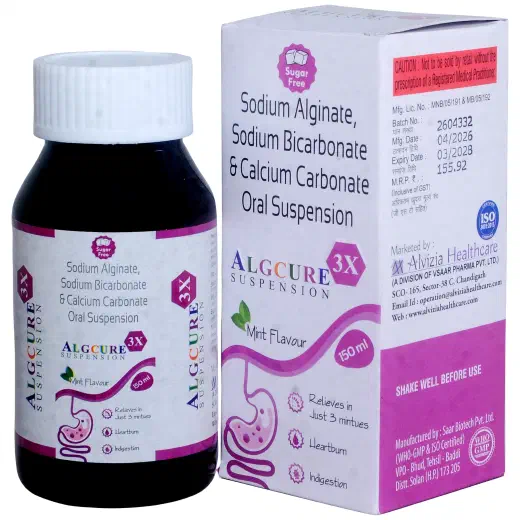
Ranitidine 75mg Syrup
Ranitidine Hydrochloride IP 75mg/5ml Oral Syrup · Gastroenterology, Antacids
SYRUP PRESENTATION:
Product Profile
Ranitidine 75mg / 5ml Oral Syrup represents a highly reliable, rapid-acting histamine H2-receptor antagonist specifically formulated for pediatric and sensitive adult gastroenterology. As an elite WHO-GMP certified pharmaceutical manufacturer in Baddi, Saar Biotech utilizes specialized aqueous stabilization technology and premium taste-masking to ensure this vital acid-suppressing agent achieves maximum bioavailability, perfect dose uniformity, and exceptional patient compliance.
DCGI Approved
Comprehensive documentation and CDSCO support for rapid market entry in India.
Fast Turnaround
30-45 days lead time for new batches with state-of-the-art logistics.
Pan-India Supply & Contract Manufacturing
Description & Therapeutic Class
This highly effective formulation is classified as an H2-Receptor Antagonist (H2RA). It is primarily indicated for the short-term treatment and maintenance of active duodenal ulcers, benign gastric ulcers, and pediatric gastroesophageal reflux disease (GERD).
While proton pump inhibitors (PPIs) act slowly over several days to block the final common pathway of acid secretion, Ranitidine provides rapid, on-demand relief by directly blocking the histamine-driven stimulation of the parietal cells. Formulating it into a stable Syrups is essential for pediatric use where tablet ingestion is impossible. By leveraging our proprietary syrup matrix, Saar Biotech guarantees a perfectly clear, homogenous liquid that is rapidly absorbed from the gastrointestinal tract, providing profound acid suppression within 60 minutes of administration.
Pan-India Supply & Contract Manufacturing
The Saar Biotech Advantage
Manufacturing liquid Ranitidine requires overcoming specific stability challenges. The Ranitidine molecule is known to be inherently unstable in aqueous solutions if the pH is not meticulously controlled, often degrading into malodorous, sulfurous compounds that destroy patient compliance. Saar Biotech operates out of a highly advanced, WHO-GMP certified facility in Baddi, Himachal Pradesh.
Our specialized liquid manufacturing lines feature state-of-the-art compounding vessels that utilize custom-engineered buffering systems. These buffers lock the syrup into the precise pH window (typically pH 6.5 to 7.5) where Ranitidine exhibits absolute thermodynamic stability. Furthermore, our robust Quality Control (QC) protocols ensure perfect dose uniformity and employ premium mint or mixed-fruit flavors to completely neutralize the API’s inherently bitter and slightly metallic taste, securing our position as the preferred partner for leading Indian pharmaceutical companies.
Pan-India Supply & Contract Manufacturing
Key Indications & Clinical Use
Ranitidine 75mg/5ml Syrup is widely prescribed across pediatric and adult populations for the rapid management of various acid-peptic disorders.
- Pediatric Gastroesophageal Reflux Disease (GERD): The primary pediatric indication. Highly effective in managing reflux esophagitis in infants and children, providing rapid relief from regurgitation, arching, and irritability.
- Duodenal & Gastric Ulcers: Utilized for the short-term treatment of active ulcers, facilitating rapid mucosal healing by significantly raising gastric pH, allowing the tissue to repair without constant acid corrosion.
- Stress Ulcer Prophylaxis: Frequently utilized in critical care and intensive care units (ICUs) to prevent stress-induced mucosal damage in mechanically ventilated pediatric patients.
- Zollinger-Ellison Syndrome: Prescribed in much higher, divided doses to manage pathological hypersecretory conditions where the stomach continuously produces excessive amounts of acid.
- Pre-anesthetic Medication: Administered prophylactically prior to general anesthesia to raise gastric pH and reduce the risk of severe chemical pneumonitis if pulmonary aspiration of gastric contents occurs during intubation (Mendelson’s syndrome).
Pan-India Supply & Contract Manufacturing
Mechanism of Action & Manufacturing Integrity
Competitive H2-Receptor Antagonism
Ranitidine exerts its remarkable therapeutic effect through a highly selective, competitive, and reversible mechanism of action at the cellular level.
Gastric acid is secreted by parietal cells located in the stomach lining. These cells are stimulated to produce acid via three primary pathways: acetylcholine, gastrin, and histamine. Histamine is the most potent of these secretagogues. Ranitidine specifically and competitively binds to the histamine H2-receptors located on the basolateral membrane of the gastric parietal cells. By occupying these receptors, Ranitidine prevents endogenous histamine from binding and activating adenylate cyclase.
This blockade drastically reduces intracellular cyclic AMP (cAMP) levels, which in turn significantly downregulates the activity of the H+/K+ ATPase pump (the proton pump). The ultimate result is a profound, rapid decrease in both the total volume of gastric juice secreted and the concentration of hydrogen ions within that juice, effectively raising the gastric pH and providing an environment conducive to mucosal healing. Crucially, Ranitidine inhibits both daytime (meal-stimulated) and nocturnal (basal) acid secretion.
Manufacturing Integrity
The clinical efficacy of liquid Ranitidine is heavily dependent on its chemical stability in solution. Saar Biotech ensures peak pharmaceutical integrity by utilizing extremely pure Ranitidine Hydrochloride API. Our proprietary compounding matrix precisely balances the pH of the syrup to prevent the hydrolytic and oxidative degradation of the Ranitidine molecule. This strict adherence to physicochemical standards guarantees that every poured 5ml dose possesses exactly 75mg of active Ranitidine throughout its entire assigned shelf life, free from toxic or malodorous degradation products.
Pan-India Supply & Contract Manufacturing
Pharmacokinetics & B2B Commercial Value
Rapid Absorption & Renal Excretion
The pharmacokinetic profile of Ranitidine Syrup is optimized for rapid clinical effect:
- Absorption: Following oral administration, Ranitidine is rapidly and completely absorbed from the gastrointestinal tract. Peak plasma concentrations are typically reached within 1 to 3 hours. Its absolute oral bioavailability is approximately 50% due to moderate first-pass metabolism in the liver.
- Distribution: It is widely distributed throughout the body tissues and readily crosses the blood-brain barrier and the placental barrier.
- Metabolism & Excretion: A portion is metabolized in the liver to N-oxide, S-oxide, and desmethylranitidine. However, the primary route of elimination is via the kidneys. Approximately 30% of an oral dose is excreted entirely unchanged in the urine within 24 hours. Therefore, dosage adjustments are required in patients with severe renal impairment (creatinine clearance < 50 ml/min).
Commercial Viability
For our B2B partners, the commercial appeal of Ranitidine Syrup remains highly significant, particularly in pediatric and institutional markets where liquid formulations are mandatory. It is a massive-volume, perpetual-demand staple in hospital formularies. Unlike PPIs, which require swallowing intact enteric-coated granules, Ranitidine Syrup provides a flexible, perfectly homogenous liquid dose that can be easily administered to infants or via nasogastric tubes. Marketing companies can capitalize on its established safety profile and rapid onset of action. Furthermore, our highly stable, perfectly taste-masked formulation ensures tremendous brand loyalty, making it an incredibly lucrative addition to any pediatric or gastroenterology portfolio.
Pan-India Supply & Contract Manufacturing
B2B & Contract Manufacturing Details
Saar Biotech is structurally optimized to support the high-volume, high-quality demands of modern pharmaceutical marketing networks. We offer comprehensive, end-to-end third-party manufacturing solutions for Ranitidine 75mg/5ml Syrup.
- Batch Size Flexibility: We accommodate variable batch sizes (from 5,000 up to 2,00,000+ units) to support both localized product launches and massive, nationwide institutional distributions.
- Packaging Customizability: The product is typically packaged in robust 100ml or 200ml capacities utilizing high-grade amber PET bottles to protect against photodegradation, equipped with highly accurate measuring cups and pilfer-proof caps.
- Advanced Taste Masking: The raw Ranitidine API possesses an inherently bitter taste and a slight sulfurous odor if not stabilized correctly. We employ advanced buffering agents and premium flavoring profiles (such as Peppermint or Mixed Fruit) to completely neutralize this, resulting in a smooth, highly palatable syrup.
- Private Labeling & Art Design: Our internal regulatory and design teams assist with carton creation, ensuring DCGI and Legal Metrology compliance on all visual assets, including specialized UV drip-off finishing options.
Pan-India Supply & Contract Manufacturing
Storage & Handling Guidelines
Maintaining the chemical stability of the syrup is critical. The product must be stored in a cool, dry place, strictly between 15°C and 30°C. It must be vehemently protected from direct sunlight and extreme heat, as thermal exposure will accelerate the degradation of the Ranitidine molecule. Do not freeze the syrup, as this can cause crystallization of the sugar base. Patients must be instructed to keep the bottle tightly closed after every use and to utilize the provided measuring cup for accurate dosing, rather than household spoons.
Pan-India Supply & Contract Manufacturing
Quality Control & Compliance
At Saar Biotech, regulatory compliance and biochemical purity are non-negotiable. Every batch of Ranitidine Syrup undergoes a rigorous, multi-tiered testing protocol within our GLP-certified analytical laboratories.
- High-Performance Liquid Chromatography (HPLC): Utilized for the precise quantification of the Ranitidine API to ensure it strictly meets IP/BP assay specifications (typically 90.0% to 110.0%).
- Degradant Profiling: We utilize advanced analytical techniques to screen for known Ranitidine related substances and degradation products (such as NDMA), ensuring the formulation remains absolutely pure and safe throughout its shelf life.
- pH & Specific Gravity: Tested to guarantee the physical consistency and the exact pH environment required for maximum API stability.
- Microbial Limit Testing (MLT): Comprehensive screening confirms the absolute absence of pathogenic microorganisms, guaranteeing safety for pediatric and critically ill patients.
Pan-India Supply & Contract Manufacturing
Safety Profile & Precautions
Ranitidine possesses a very well-established and favorable safety profile. The most commonly reported adverse events are mild and transient, including headache, dizziness, mild gastrointestinal disturbances (constipation or diarrhea), and rarely, a mild skin rash.
However, professional discretion is required. Because the primary route of excretion is renal, the dosage must be significantly reduced in patients with severe renal impairment to prevent drug accumulation and potential central nervous system toxicity (confusion, hallucinations). It should be used with caution in patients with hepatic impairment, as it undergoes partial liver metabolism. Unlike cimetidine, Ranitidine does not significantly inhibit the cytochrome P450 enzyme system in the liver, meaning it has far fewer drug-drug interactions. However, by raising gastric pH, it can reduce the absorption of drugs that require an acidic environment to dissolve (such as ketoconazole or itraconazole).
For third-party manufacturing enquiries, private-label contracts, or to request pricing and packaging options for Ranitidine 75mg/5ml Syrup, please use the B2B enquiry form below.
Pan-India Supply & Contract Manufacturing
Clinical Q&A for Ranitidine 75mg Syrup
Technical data on bioavailability, pediatric dosing protocols, and therapeutic efficacy for healthcare professionals.
What are the clinical indications for Ranitidine 75mg/5ml Syrup?
How does Ranitidine work as an H2 receptor antagonist?
What is the standard dosing protocol for Ranitidine Syrup?
What are the key drug interactions and precautions?
What are the common side effects of Ranitidine Syrup?
B2B Manufacturing Guide for Ranitidine 75mg Syrup
Detailed insights on MOQs, lead times, and regulatory support for contractmanufacturing partners.
Related Health Solutions
Explore other trusted medicines that help treat similar health conditions.