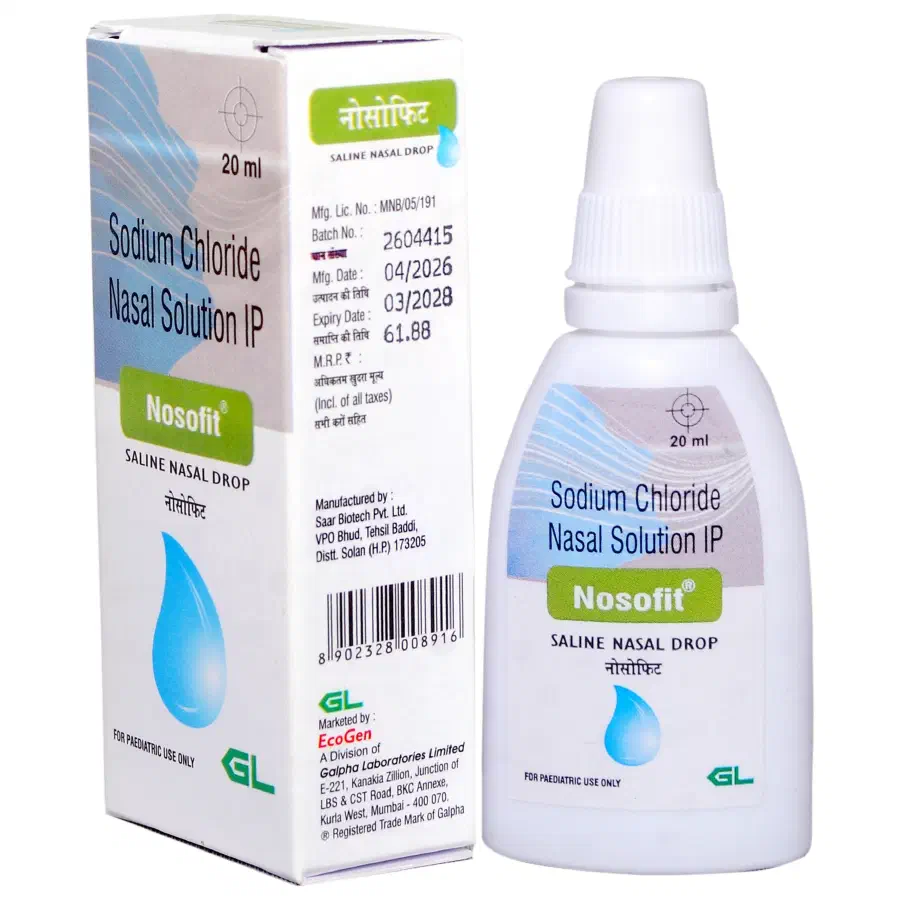
Sodium Chloride Nasal Spray
Sodium Chloride IP · Cough & Cold, Pediatric Care, Respiratory
Sodium Chloride 0.65% Nasal Spray (Hypotonic)
Sodium Chloride 0.9% Nasal Spray (Isotonic)
Sodium Chloride 2.6% Nasal Spray (Hypertonic)
Product Profile
Sodium Chloride 0.65% Nasal Spray is one of the most widely recommended non-medicated nasal care products for daily mucosal hygiene, congestion relief, and paediatric nasal care. As a WHO-GMP certified pharmaceutical manufacturer in Baddi, Saar Biotech produces this precisely buffered hypotonic saline spray with a formulation engineered for gentle, consistent mucosal delivery across all patient groups — from neonates to adults.
DCGI Approved
Comprehensive documentation and CDSCO support for rapid market entry in India.
Fast Turnaround
30-45 days lead time for new batches with state-of-the-art logistics.
Pan-India Supply & Contract Manufacturing
Clinical Overview & Indications
Sodium Chloride 0.65% Nasal Spray belongs to the category of Nasal Sprays and is classified as a nasal lubricant and irrigation solution. Unlike medicated nasal sprays, it contains no corticosteroids, antihistamines, or vasoconstrictors — making it uniquely safe for unrestricted daily use in all age groups, including infants.
The formulation addresses a broad range of nasal conditions:
- Nasal Congestion & Stuffiness: Thinning of thickened secretions caused by colds, flu, and sinusitis, improving airflow and breathing comfort without rebound congestion risk.
- Allergic Rhinitis Support: Physical removal of airborne allergens including pollen, dust mites, and particulate matter from nasal passages — reducing the allergenic load on the mucosa.
- Nasal Dryness & Irritation: Restoring mucosal moisture in patients exposed to dry air, air conditioning, air travel, or prolonged decongestant/steroid spray use.
- Paediatric Nasal Hygiene: Gentle daily nasal cleansing for infants and young children who cannot blow their nose independently.
- Post-Operative Nasal Care: Adjunctive use following sinus surgery to keep nasal passages clean and support mucosal healing.
- Environmental & Occupational Exposure: Regular use by individuals exposed to dust, smoke, chemical fumes, or high-pollution environments.
This product occupies a high-volume, high-repurchase position in the ENT, paediatric, and general wellness segments — an attractive proposition for pharma marketing companies building a nasal care portfolio.
Pan-India Supply & Contract Manufacturing
The Saar Biotech Advantage
Saar Biotech’s manufacturing facility in Baddi brings a formulation discipline to this seemingly simple saline product that directly translates into superior batch consistency and brand reliability for our third-party partners.
- Precise pH Buffering: Our formulation is maintained in a physiologically compatible pH range of 6.0–7.5, preventing mucosal irritation on application and ensuring stability throughout the product’s 24-month shelf life. Unbuffered or improperly pH-adjusted saline products are a common quality failure in this segment.
- Controlled Tonicity Variations: The 0.65%, 0.9%, and 2.6% concentrations are precisely maintained via validated in-process controls. Even minor deviations in salt concentration affect both patient comfort and mucosal physiology — our automated filling lines eliminate this variability, allowing partners to confidently market targeted hypotonic, isotonic, and hypertonic product tiers.
- Preservative System Validation: Every batch undergoes Preservative Efficacy Testing (PET) to confirm the antimicrobial system remains effective throughout the shelf life, meeting IP/Ph. Eur. standards — critical for a multi-dose container product.
- Pump Spray Consistency: We use metered-dose pump assemblies validated for consistent spray volume delivery, ensuring patients receive the intended dose with each actuation.
Pan-India Supply & Contract Manufacturing
Mechanism of Action & Formulation Science
How Saline Acts on the Nasal Mucosa
Sodium Chloride 0.65% functions through direct physicochemical interaction with the nasal mucosa rather than pharmacological receptor binding.
As a hypotonic solution, it draws moisture into the mucosal surface via osmotic activity, rehydrating dried or thickened epithelial cells. This restores the normal aqueous layer of the mucus blanket, enabling the underlying mucociliary transport system to resume effective function. Ciliary beating rate — a key measure of nasal health — has been shown in clinical literature to improve following regular saline irrigation, facilitating clearance of allergens, pathogens, and debris from nasal passages.
The solution also physically dilutes and flushes mucus, reduces local inflammatory mediator concentrations by dilution, and creates a mildly unfavourable ionic environment for certain respiratory pathogens. Importantly, the hypotonic 0.65% concentration is specifically selected to avoid the transient mucosal irritation that can occur with isotonic or hypertonic solutions in patients with sensitive or inflamed nasal epithelium.
Manufacturing Precision That Preserves Efficacy
While sodium chloride is a chemically stable molecule, maintaining the precision of this formulation at manufacturing scale requires rigorous process controls:
- Concentration Accuracy: Our automated gravimetric dispensing systems ensure the 0.65% w/v strength is maintained within a ±0.02% tolerance across all batch sizes — from 2,000-unit pilot runs to commercial batches exceeding 1,00,000 units.
- Buffer System Integrity: The phosphate buffer system (sodium phosphate monobasic / dibasic) that maintains pH is prepared and verified independently before incorporation into the bulk solution. This two-stage verification prevents pH drift, which is the most common stability failure point in saline nasal products manufactured at scale.
- Filling Environment Controls: The nasal spray solution is filled in a controlled environment to prevent microbial and particulate contamination, with in-process checks at defined intervals to confirm fill volume uniformity across the pump bottle format.
Pan-India Supply & Contract Manufacturing
Pharmacology & Product Positioning
Sodium Chloride 0.65% Nasal Spray operates through a purely physical mechanism — there is no systemic absorption, no receptor pharmacology, and no drug-drug interaction profile. This makes it one of the safest nasal products across all patient populations and a compelling OTC retail product for partners.
- Onset of Action: Relief from nasal dryness and stuffiness is typically experienced within minutes of application, as the hypotonic solution immediately hydrates the nasal mucosa and thins secretions on contact.
- Duration of Effect: The moisturising effect lasts 4–6 hours under typical conditions, supporting a dosing pattern of 1–5 applications per day as needed. This flexible, on-demand usage profile makes it easy for patients to incorporate into daily routines.
- Zero Systemic Absorption: As a topically applied saline solution, Sodium Chloride 0.65% has no measurable systemic bioavailability. This makes it safe during pregnancy, lactation, and in patients on complex medication regimens — eliminating the contraindication discussions that complicate medicated nasal spray prescribing.
- Adjunct Synergy: Used 5–10 minutes before a corticosteroid or antihistamine nasal spray, saline pre-treatment clears mucus and debris from the mucosal surface, enhancing the deposition and efficacy of the subsequent medicated spray. This clinical synergy makes Sodium Chloride Nasal Spray a natural companion SKU to medicated nasal products — an upselling opportunity within a partner’s ENT range.
- Pack Size Logic: The 10 ml, 15 ml, and 20 ml formats are aligned with typical usage cycles. The 10 ml is positioned as a trial, travel, or paediatric SKU; the 15 ml as a standard monthly pack; and the 20 ml for regular adult users and seasonal allergy patients who require higher-frequency use. This pack tiering allows partners to address multiple price points within a single product range.
Pan-India Supply & Contract Manufacturing
B2B & Contract Manufacturing Details
Saar Biotech offers specialised Contract Manufacturing (CMO) and Third-Party Manufacturing services for Sodium Chloride 0.65% Nasal Spray from our liquid dosage manufacturing facility in Baddi, Himachal Pradesh. This product is part of our growing ENT and Respiratory nasal spray range.
- Facility: Dedicated liquid filling infrastructure with metered-dose pump assembly and automated volumetric fill-and-seal lines for nasal spray formats.
- Capacity: Pilot batch capability from 2,000 units with commercial scale to 1,00,000+ units per production run.
- Quality Lab: In-house GLP-certified QC laboratory with pH meters, titration setups, HPLC, and microbial testing capability for full in-house batch release.
- Turnaround: 30–45 working days for new orders; 20–25 working days for repeat orders from established partners.
- Packaging: Available in 10 ml, 15 ml, and 20 ml metered-dose pump spray bottles with custom mono-carton design, label artwork, and Schedule M-compliant labelling.
- Regulatory: DCGI-compliant manufacturing; complete COA, batch records, and testing reports provided. Brand name search and DCGI approval support available.
- MOQ: 5,000–10,000 units per SKU depending on pack size, with flexibility for new market entrants.
Pan-India Supply & Contract Manufacturing
Storage & Handling Guidelines
Sealed Product Storage: Store the unopened product below 30°C in a dry location, away from direct sunlight and heat sources. The product must not be frozen, as freeze-thaw cycling can disrupt the buffer system and alter the solution’s pH and tonicity. Store upright to maintain pump priming and prevent potential leakage around the valve assembly.
In-Use Period: Once the tamper-evident seal is broken and the product is in use, it should be used within 30 days. This window accounts for the antimicrobial preservative system’s validated efficacy period after repeated opening. Patients should be counselled against using the product beyond this period even if solution remains in the bottle.
Hygiene & Cross-Contamination Prevention: The nasal spray nozzle should be wiped clean after each use and the protective cap replaced. The product must never be shared between individuals, as shared nasal applicators present a significant cross-infection risk for respiratory pathogens.
Packaging Material Rationale: The product is filled into HDPE (High-Density Polyethylene) pump spray bottles, selected for their chemical compatibility with saline solutions, moisture barrier properties, and structural integrity under the pumping mechanism’s repeated actuation pressure. HDPE also provides an effective barrier against the light and UV exposure that can compromise the preservative system over the product’s shelf life.
Pan-India Supply & Contract Manufacturing
Quality Control & Compliance
Every batch of Sodium Chloride 0.65% Nasal Spray at Saar Biotech is released only after completing a full analytical testing protocol in our GLP-certified quality control laboratories in Baddi. The following tests are performed as standard:
Assay (Label Claim Accuracy): Titrimetric or validated analytical method confirming the Sodium Chloride concentration falls within the specified 0.65% ± tolerance range. This ensures every unit delivers the intended hypotonic saline concentration, maintaining the product’s moisturising and mucosal physiology rationale.
pH Testing: Verification that each batch falls within the target physiological pH range (6.0–7.5). pH deviation is the most clinically significant quality failure in saline nasal products and directly affects patient comfort and mucosal safety.
Microbial Limit Test (MLT): Confirms absence of specified pathogens and total aerobic microbial count within IP limits — critical for a multi-dose nasal product used in close proximity to the upper respiratory tract.
Preservative Efficacy Test (PET): Validates that the preservative system (Benzalkonium Chloride) inhibits microbial growth under defined challenge conditions throughout the shelf life. This test is mandatory for multi-dose liquid nasal preparations.
Fill Volume Accuracy: In-process and final checks on fill volume per bottle across each batch to confirm consistent delivery per actuation and overall pack volume.
Pan-India Supply & Contract Manufacturing
Side Effects & Safety Profile
Sodium Chloride 0.65% Nasal Spray is generally very well-tolerated across all patient populations, including infants and the elderly. As a non-medicated product, it does not produce systemic adverse effects.
Mild and transient local reactions that may occur in a small number of users include:
- Temporary stinging or burning sensation on application, particularly in patients with significantly inflamed or eroded nasal mucosa.
- Transient sneezing immediately following application.
- Mild watery discharge for a brief period after use.
These effects are self-limiting and typically resolve within minutes. The product is contraindicated only in patients with documented hypersensitivity to any of the listed excipients, including Benzalkonium Chloride. For patients with known Benzalkonium Chloride sensitivity, a preservative-free formulation should be considered — Saar Biotech can accommodate this as a custom specification for partner brands.
Healthcare professionals should refer to the approved product labelling for complete safety and prescribing information.
For B2B manufacturing enquiries, third-party contracts, or to request a technical dossier for Sodium Chloride 0.65% Nasal Spray, please use the enquiry form below.
Pan-India Supply & Contract Manufacturing
Clinical Q&A for Sodium Chloride Nasal Spray
Technical data on bioavailability, pediatric dosing protocols, and therapeutic efficacy for healthcare professionals.
What are the primary clinical indications for Sodium Chloride 0.65% Nasal Spray?
How do the 0.65%, 0.9%, and 2.6% saline variations differ clinically?
Is Sodium Chloride 0.65% Nasal Spray safe for infants and young children?
Does long-term daily use of saline nasal spray cause any adverse effects or dependency?
What is the shelf life and recommended in-use period for Sodium Chloride 0.65% Nasal Spray?
Can Sodium Chloride Nasal Spray be used alongside corticosteroid or decongestant nasal sprays?
B2B Manufacturing Guide for Sodium Chloride Nasal Spray
Detailed insights on MOQs, lead times, and regulatory support for contractmanufacturing partners.
Same Formula
Other high-quality products that use the same effective active ingredients.
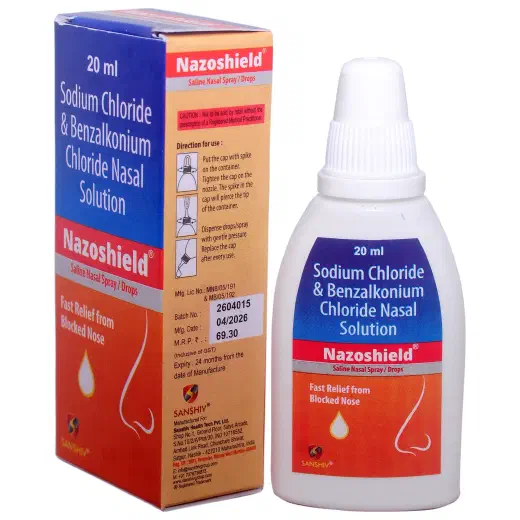
Related Health Solutions
Explore other trusted medicines that help treat similar health conditions.